
Pool Cage Rescreening in Gulf Gate, FL
We rescreen pool cages and lanais for Gulf Gate homeowners, replacing storm-damaged, sun-brittled, or torn screen with panels sized to your enclosure.
Get a Free Estimate Today With Sarasota Pool Cage Painting!
Request a free rescreening estimate for your Gulf Gate pool cage.
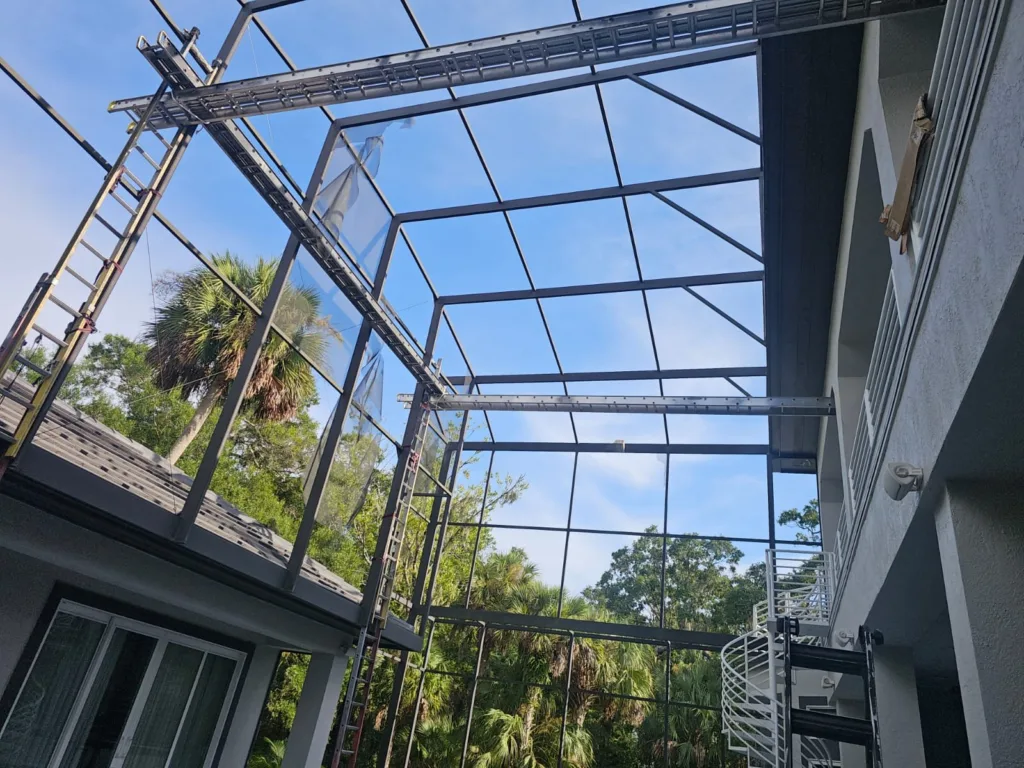
Gulf Gate’s older ranch homes and mid-century lanais, many built decades before newer screening mesh was standard, often carry the original screen long past its useful life. Salt-tinged air moving up from Sarasota Bay and the Gulf, combined with intense UV exposure, breaks down screen fiber from the inside out, so panels that look intact can tear with light pressure. Afternoon thunderstorms common to this part of Sarasota County put sudden wind load on weakened screen, which is when most homeowners notice the damage.
We rescreen pool cages throughout Gulf Gate’s established neighborhoods, from the streets near Gulf Gate Elementary to the canal-adjacent lots closer to Phillippi Creek, working panel by panel or as a full enclosure replacement depending on the screen’s condition and age. Our crews measure each panel on site, match framing and spline sizes, and remove old screen without damaging aluminum that is still sound, so you are not paying to replace parts of the cage that do not need it.
Screen Wear in Gulf Gate’s Climate
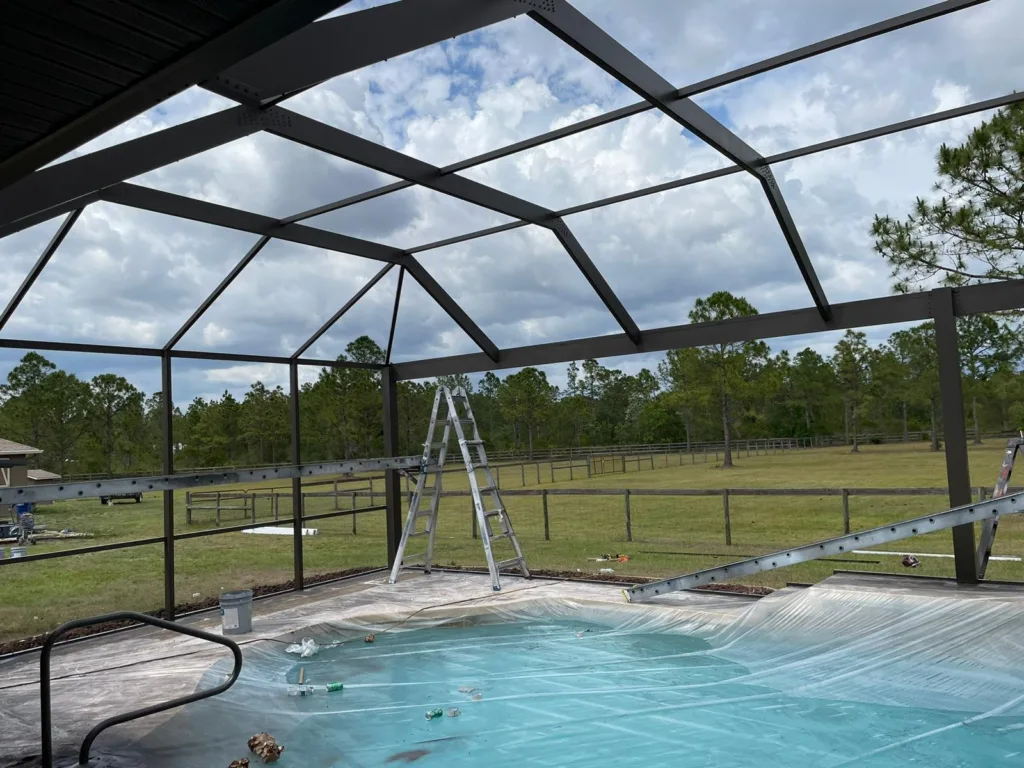
Gulf Gate sits close enough to Sarasota Bay that salt-laden air reaches pool cages year-round, settling into screen fibers and aluminum fasteners alike. Combined with Florida’s UV intensity, this accelerates the breakdown of fiberglass and polyester mesh, leaving screens brittle. Homeowners often notice small tears near panel corners first, a sign the mesh has already lost most of its flexibility.
Afternoon thunderstorms are a near-daily occurrence here from late spring through summer, and wind-driven rain finds any existing gap in a screen fast. Debris from oaks and palms common in Gulf Gate’s older neighborhoods also stresses weakened mesh during storms, turning small holes into larger rips that let in insects, leaves, and pool debris.
Because many Gulf Gate homes were built before today’s screening materials were standard, original mesh may be decades old even if panels still appear intact. A straightforward way to check is to press gently on the screen in a shaded panel; if it gives or tears instead of flexing back, rescreening is worth scheduling before the next storm season.
How We Rescreen a Pool Cage
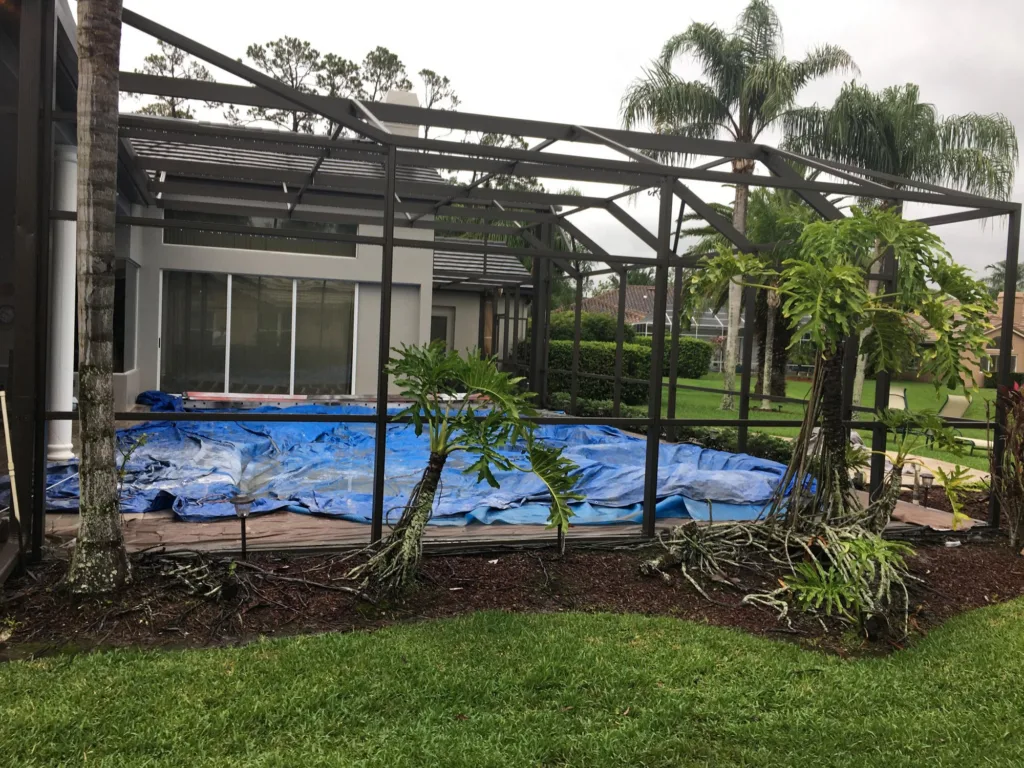
Every rescreening job starts with a walk-around inspection of the cage structure itself, checking aluminum framing, fasteners, and existing spline channels for corrosion or damage before any screen comes out. This step matters in Gulf Gate because salt exposure can weaken fastening points even when the screen looks fine, and addressing that first prevents repeat work.
Panels are removed one section at a time, old spline and mesh stripped from the channel, and the frame cleaned so the new screen seats properly. Mesh selection depends on the homeowner’s priorities, whether that is standard fiberglass, heavier pet-resistant mesh, or a solar screen option for pool decks that get strong afternoon sun.
New screen is stretched taut and secured with fresh spline, then trimmed cleanly along each frame edge. Once all panels are reinstalled, the crew checks for consistent tension across the cage and clears away old mesh, spline scraps, and packaging before leaving the property, so the pool area is usable the same day work finishes.
- Frame and fastener inspection before removal
- Mesh options: standard, pet-resistant, or solar screen
- Panel-by-panel removal and re-spline
- Tension check across all panels
- Full site cleanup after installation
Timeline, Access, and Your HOA
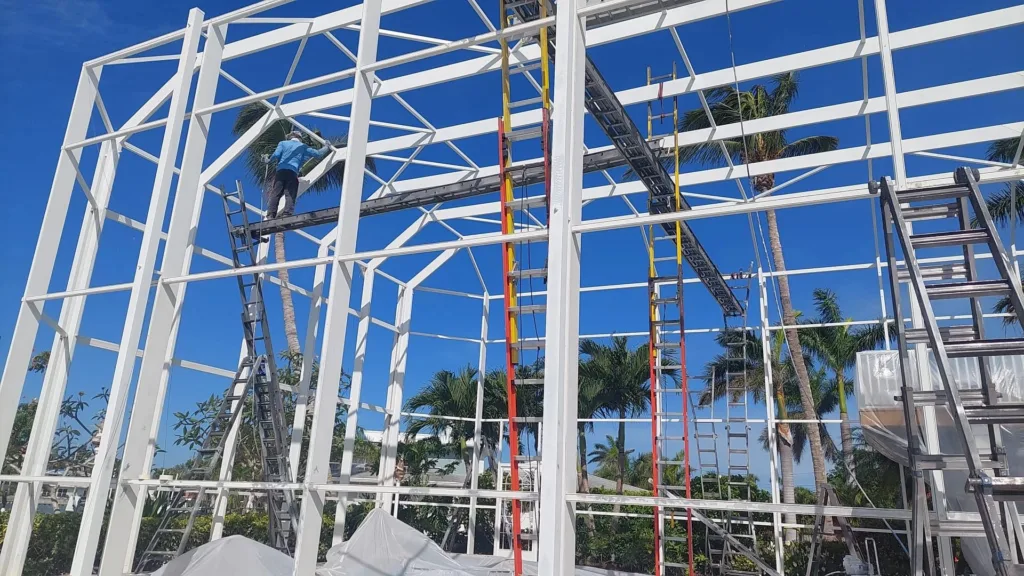
Most Gulf Gate rescreening jobs run one to three days, depending on cage size and how much old screen and spline need to come out first. Weather is the main variable; summer storm patterns common to the Sarasota–Bradenton area can push a start date back, so crews build a buffer into scheduling rather than rushing between rain cells.
Crews need clear access to the pool enclosure from outside or through a gate wide enough for ladders and screen rolls, plus permission to work around the pool itself. If furniture, planters, or grills sit against the panels, clearing that area beforehand shortens the job. Pets and small children are best kept away from the work zone until panels are reinstalled.
Many Gulf Gate neighborhoods fall under deed restrictions or HOA architectural review, particularly in communities with uniform exterior standards. We can supply a written scope and material specs for board submission, but approval timing is the homeowner’s responsibility, so it is worth checking requirements before locking in a start date.
- Confirm gate width and yard access before the crew arrives
- Clear pool furniture, planters, and grills from the cage perimeter
- Check your community’s architectural review process for screen color or mesh type restrictions
- Ask for a written scope if your HOA requires documentation
- Plan for a one to three day window, longer if storms are in the forecast
Common Rescreening Mistakes to Avoid
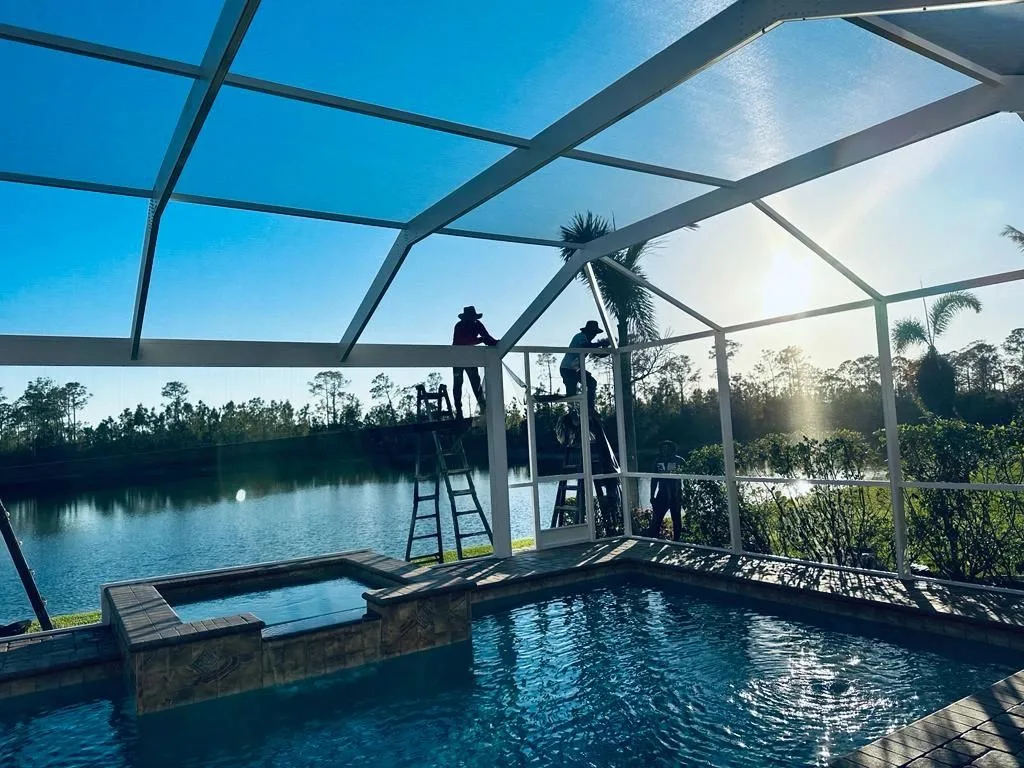
Patching a few torn panels while leaving old spline in the rest of the track is a common shortcut. Spline hardens and cracks with UV and heat exposure over time, so screen installed next to brittle spline often pulls loose again within a season or two, even if the new mesh itself is sound.
Mismatched mesh is another frequent issue, especially when patch jobs mix different screen weights or colors across visible panels. Beyond the uneven look, lighter-gauge mesh patched into a frame built for heavier screen wears unevenly and tends to fail first at the seams.
The costliest mistake is rescreening over a frame with active corrosion. Pitted or flaking aluminum, especially at corner joints and where panels meet the pool deck, will keep deteriorating under new screen. Addressing frame condition first, even if it adds a step, protects the rescreening investment rather than masking a problem that resurfaces.
Process and Timeline
- Inspect the full cage structure, noting frame corrosion, loose fasteners, and spline condition panel by panel.
- Confirm mesh type, weight, and color with the homeowner, matching existing material or upgrading as requested.
- Remove old screen and spline completely rather than patching around damaged sections.
- Address any frame repairs or corroded spots before new screen goes in.
- Install new screen and spline panel by panel, trimming and tensioning for a flush fit.
- Walk the finished enclosure with the homeowner to check panels, doors, and latch function.
Most Gulf Gate rescreening projects take one to three days from start to finish, depending on cage size and weather.
Gulf Gate Pool Cage Rescreening FAQ
How long does it take to rescreen a pool cage in Gulf Gate?
Most Gulf Gate pool cages take one to two days to rescreen, depending on the panel count and whether any aluminum framing needs repair first. Larger lanais or enclosures with curved roof panels can run closer to three days, and the crew will give you a firm window after the initial measurement.
Do I need HOA approval before rescreening my lanai in Gulf Gate?
Several Gulf Gate neighborhoods and communities have architectural guidelines covering screen color, mesh type, or exterior changes, so it is worth checking with your HOA or deed restriction documents before work begins. The crew can provide spec sheets on mesh and frame materials if your association requires documentation.
What screen mesh holds up best against Sarasota's salt air and sun?
Fiberglass screen is the common choice for Gulf Gate homes because it resists the humidity and intense UV exposure typical of this part of Sarasota County without becoming brittle as quickly as some alternatives. For homes closer to brackish water or with heavy pet activity, a heavier gauge or pet-resistant mesh is often a better long-term fit, and this gets discussed during the estimate.
Can you rescreen just the damaged panels instead of the whole cage?
Yes, panel-by-panel rescreening is common and avoids the cost of redoing an entire enclosure when only a few sections have torn or discolored screen. The tradeoff is that newly installed mesh may look slightly different in tone from older, sun-faded panels until everything weathers evenly.
Will my pool need to be covered or closed during rescreening work?
The pool itself stays usable in most cases, though it is common practice to cover furniture, loose pool equipment, and the water surface during screen removal to keep debris out. If spraying or framework repair is involved, the crew will let you know ahead of time whether a brief pool cover is recommended.
What causes screen in Gulf Gate pool cages to fail so quickly after storms?
Wind-driven debris during Gulf Coast storm season tears screen fibers, and the repeated cycle of heavy rain followed by intense sun accelerates UV breakdown in mesh that is already stressed. Salt-laden air moving inland from nearby coastal areas also speeds up corrosion at the screw and spline points, which loosens panels even before the mesh itself visibly fails.
Statewide details, colors and the full process are on our main pool cage rescreening page.
Recent Work

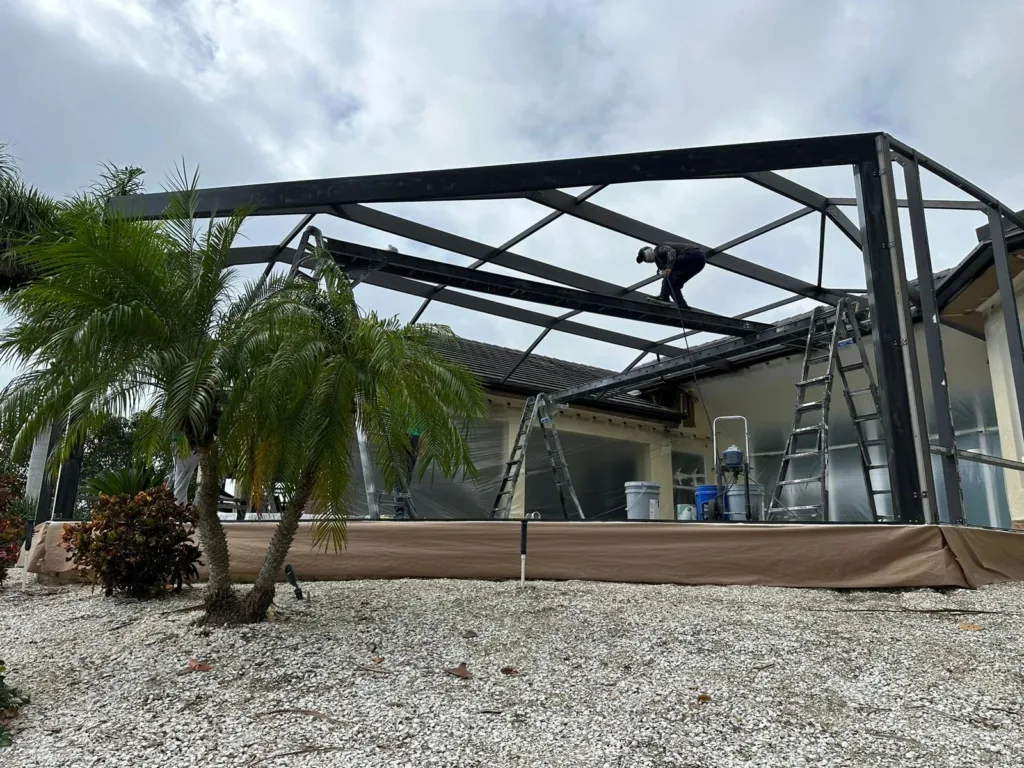
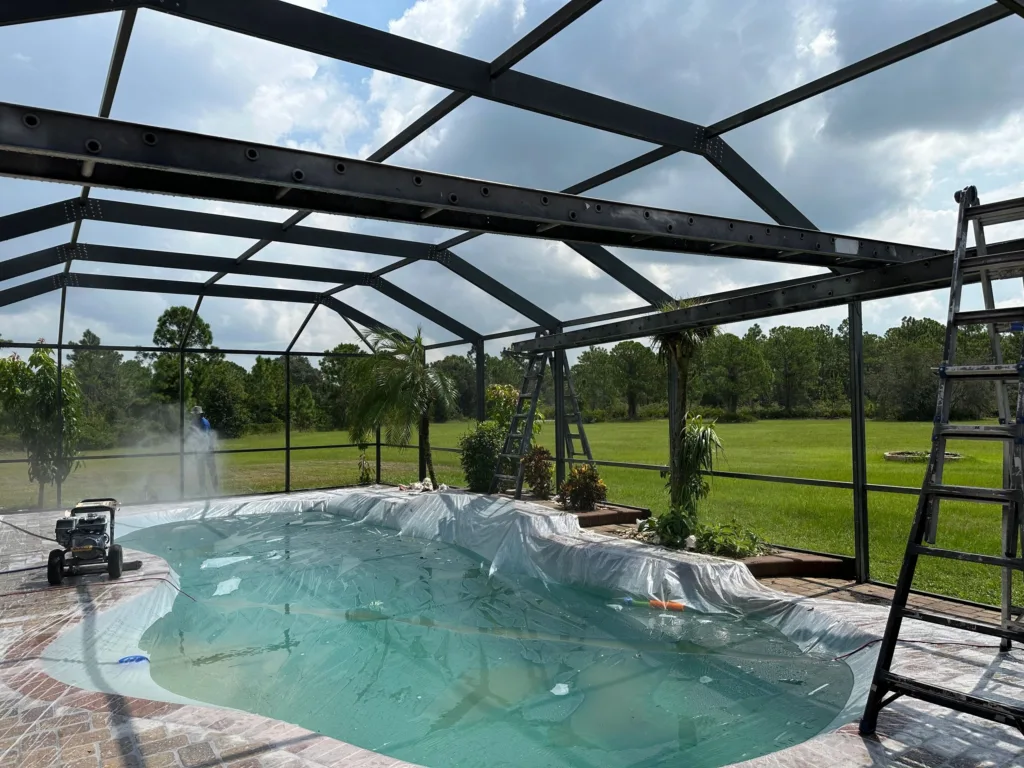
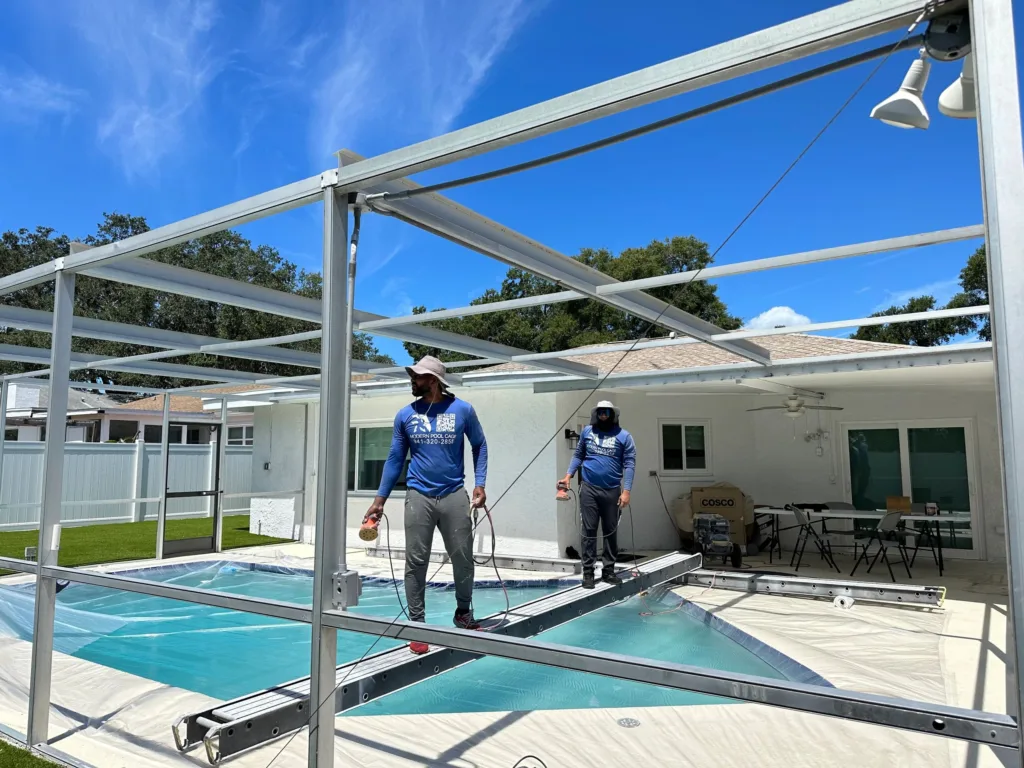
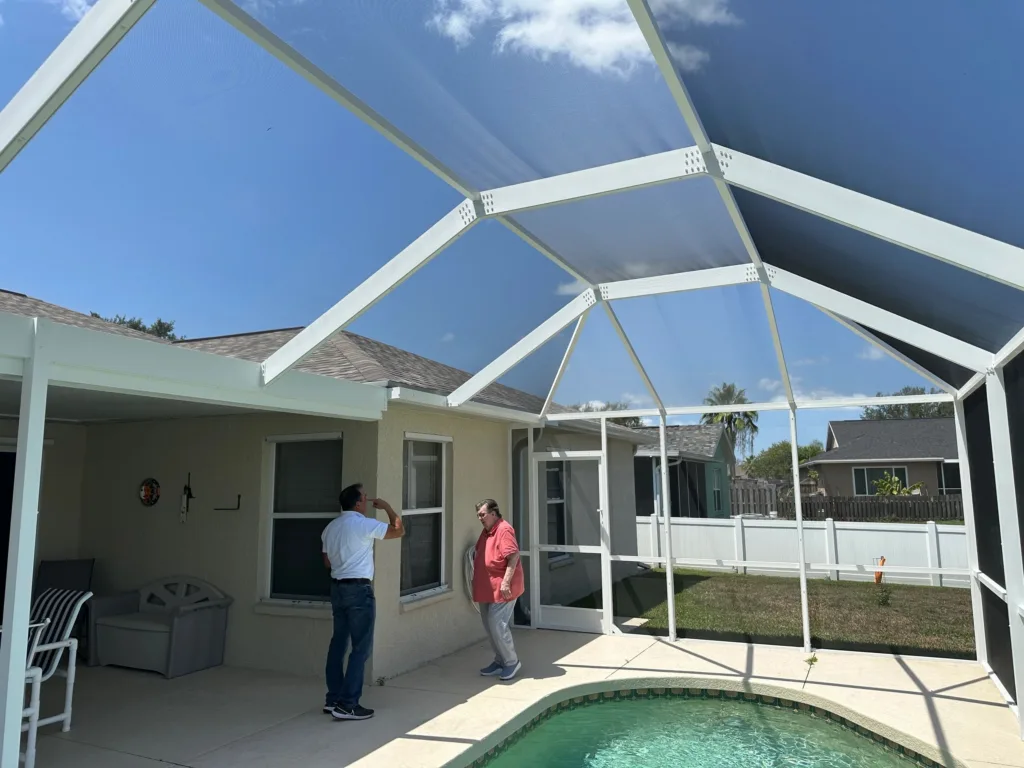
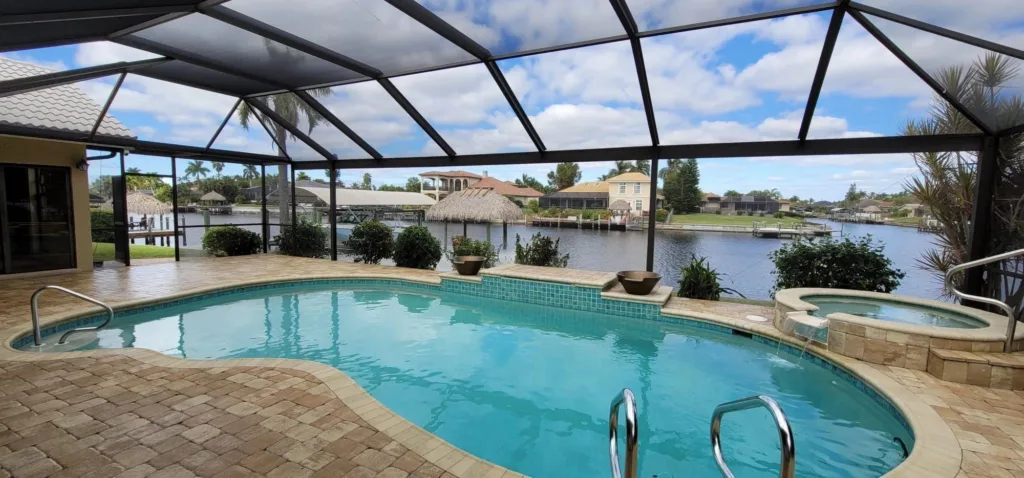
Request a Gulf Gate Rescreening Estimate
Send a few photos of your pool cage along with your Gulf Gate address, and you will receive a written estimate outlining the scope of work, mesh options, and an estimated timeline. For questions before then, call (877) 840-6727.
Last reviewed: October 30, 2026