
Panoramic Screen Conversion Port Charlotte FL
We convert standard screen panels into clear panoramic picture-window sections on existing pool cages throughout Port Charlotte, opening up water and canal views without rebuilding the frame.
Get a Free Estimate Today With Sarasota Pool Cage Painting!
Tell us about your pool cage and we will put together a free written estimate.
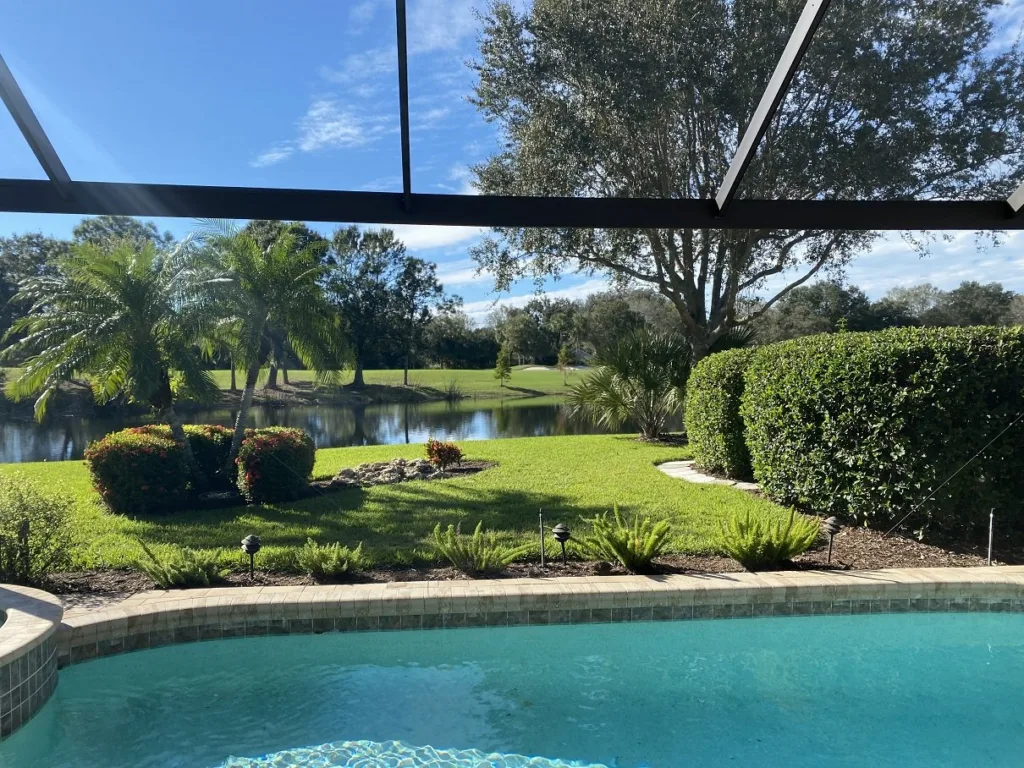
Port Charlotte sits in Charlotte County, Southwest Florida, home to roughly 61,000 residents spread across waterfront sections along the Myakka and Peace Rivers and inland grid neighborhoods built in the 1960s and 70s. Many of these pool cages are original to the home, with full screen panels that have gradually clouded, sagged, or torn from decades of sun and storm exposure.
A panoramic conversion removes selected screen panels, typically along the view side facing a canal, golf course, or backyard, and replaces them with clear vinyl or acrylic picture-window sections set into the existing aluminum frame. We assess the frame condition first, since conversions only make sense on a cage structurally sound enough to carry the new panel weight and wind load.
Waterfront Cages Along Charlotte Harbor
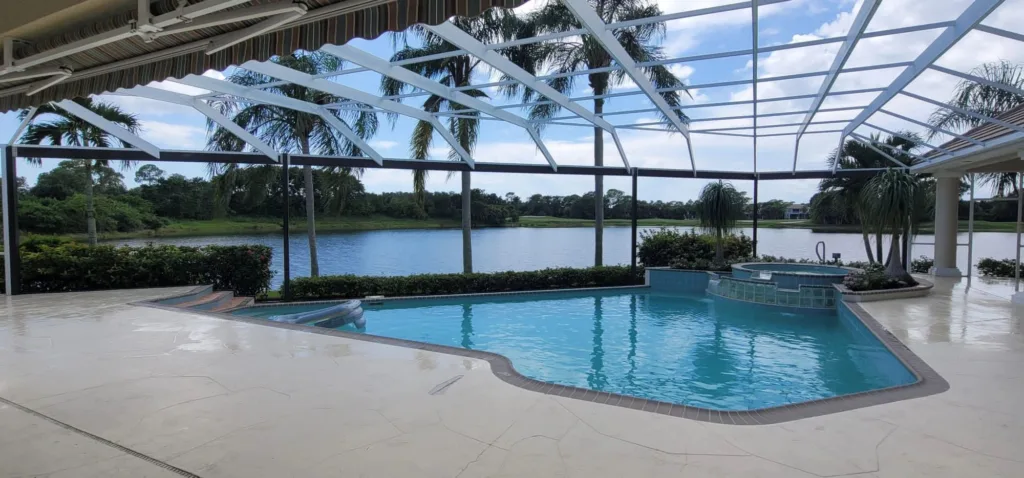
Canal lots in Cleveland and Harbour Heights, along with the deeper-water sections near Charlotte Harbor itself, were built to put the water view front and center, yet many original pool cages still carry full-height screen panels and horizontal support ribs that break up that view into a grid. A panoramic conversion removes those ribs from the section facing the canal or harbor, replacing them with clear vinyl or no-see-um mesh picture panels framed only at the top and bottom.
Charlotte Park and the older platted streets closer to US-41 sit slightly inland, but even there, cages facing retention ponds or golf frontage benefit from the same treatment. The tradeoff is wind load: harbor-facing cages take more direct gusts during tropical storms, so panoramic panels on these lots need properly rated vinyl and secure astragal fasteners, not the lighter screen mesh used on a side yard enclosure.
Salt air moving in off Charlotte Harbor accelerates corrosion on aluminum fasteners and track faster than it does a few miles inland. Any panoramic conversion in these waterfront neighborhoods should include a check of the existing frame’s screws and connector clips before new panels go in, since clear panoramic sections put more visual attention on a frame that salt exposure may have already weakened.
How a Panoramic Conversion Is Done
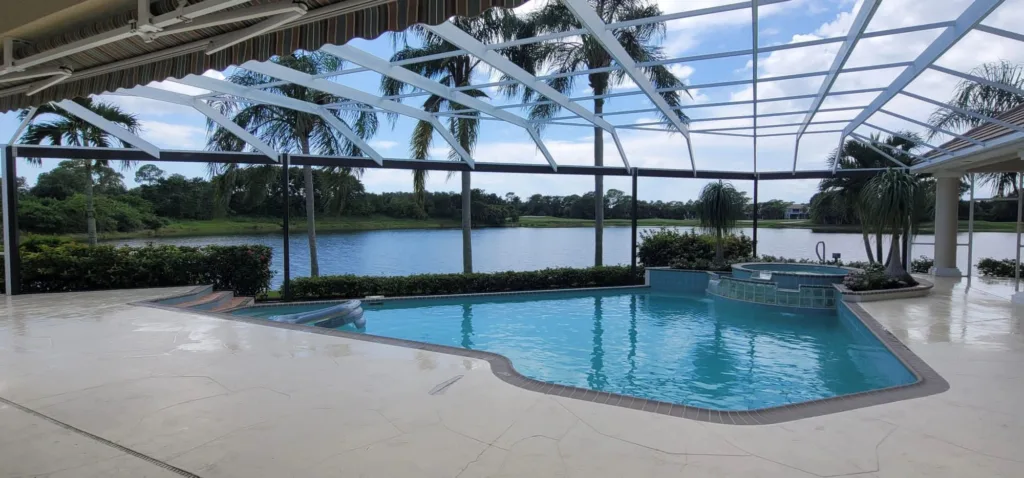
Work starts with an inspection of the aluminum frame itself, checking the top and bottom tracks, corner brackets, and support beams for corrosion, loose fasteners, or bowing before any panel comes out. This matters more on a panoramic conversion than a standard rescreen, because removing the horizontal ribs that once provided mid-span support means the remaining frame has to carry that load differently.
Once the frame is confirmed sound, the existing screen panels in the chosen section are removed and the ribs are either eliminated or relocated outside the main sightline. Clear panoramic panels, typically clear vinyl or specialty picture-window screen, are cut to the new panel dimensions and set into the track with fresh spline and astragal bar, then sealed where the panel meets the frame to keep out wind-driven rain.
The remaining sections of the cage, those not being converted, are inspected and rescreened as needed so the whole enclosure is consistent in tension and condition. A finished conversion is weather-sealed at every seam and checked for proper panel tension before the crew leaves, since a panoramic panel installed too loose will flutter and wear prematurely in Gulf coast wind.
- Frame and fastener inspection for corrosion or movement
- Removal of horizontal ribs in the panoramic section
- Panel cutting and setting with new spline and astragal
- Sealing panel edges against wind-driven rain
- Rescreen and tension check on remaining cage sections
Timeline, Access, and HOA Approval
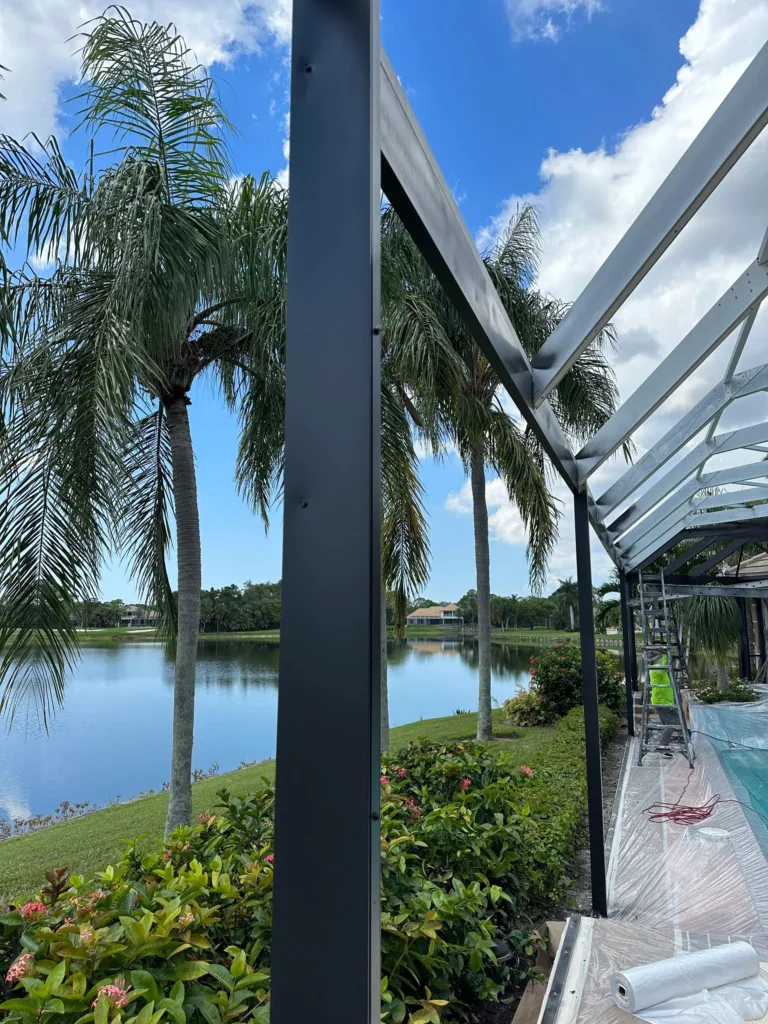
A panoramic conversion on a standard Port Charlotte lanai typically runs several days to about two weeks, depending on cage size, panel count, and whether structural reinforcement is needed. Summer thunderstorm patterns common to Southwest Florida can push a schedule back a day or two at a time, so crews build in flexibility rather than rushing panel installation ahead of a storm front.
Most homes in Port Charlotte’s platted grid neighborhoods, from Charlotte Park to Grove City, fall under some form of deed restriction. Many community associations require a drawing or product spec sheet before changing screen panels to clear panoramic view panels, since the change alters the cage’s appearance from the street or canal. Submitting that paperwork early keeps the project moving once crews arrive.
Pool access is limited only during active panel removal and frame work, usually a portion of one day. Homeowners can generally keep using the yard and pool the rest of the time, with tools and materials staged along the cage perimeter rather than blocking walkways.
Avoiding Common Conversion Mistakes
A panoramic panel is heavier and stiffer than screen mesh, so it puts different stress on a frame than what the cage was originally built for. If a crew installs clear panels into an aluminum frame without checking wall thickness and fastener spacing first, the extra wind load can rack a panel or pull a track loose within a season or two.
Mismatched gauge is a frequent issue on older Port Charlotte cages, where a prior repair used a lighter aluminum extrusion than the original structure. Fitting panoramic panels onto that mix without reinforcing the affected span is a common cause of sagging corners and gaps that let water track in during wind-driven rain.
Proper prep means removing old screen and spline fully, confirming the frame is square, and resealing fastener points before any panel goes in. Skipping that step to save time is the most common reason a conversion needs rework within a year.
- Frame gauge and fastener spacing checked against panel weight before ordering
- Corner brackets and anchor points inspected for corrosion from salt air
- Track alignment verified so panels sit flush without forcing a bow
- Sealant applied at all panel edges, not just visible seams
Process and Timeline
- Initial site visit and free written estimate covering frame condition and panel scope
- HOA or deed restriction paperwork submitted where required
- Old screen panels removed and frame inspected for gauge, corrosion, and square
- Structural reinforcement added at any weak brackets or tracks before panel fitting
- Panoramic panels installed, sealed, and checked for flush alignment
- Final walkthrough with the homeowner before crew leaves the site
Most panoramic conversions in the Port Charlotte area are completed within one to two weeks, weather permitting.
Port Charlotte Panoramic Screen Conversion FAQ
Can any pool cage in Port Charlotte be converted to picture-window panels, or does the frame need upgrading first?
Most cages can accept a panoramic conversion, but the existing beams and footers are inspected first for corrosion, gauge thickness, and spacing. Older aluminum from original Port Charlotte construction sometimes needs reinforced horizontal members before the larger clear panels go in, which is noted in the written estimate.
Will a panoramic conversion hold up to wind during a Southwest Florida hurricane season?
Panoramic panels are installed with spline and hardware sized to the opening and rated for local wind exposure, following Charlotte County permitting requirements. No enclosure component is wind-proof, but a properly engineered conversion performs the same structural role as the screen it replaces.
Do Port Charlotte deed-restricted communities require HOA approval for panoramic screen conversions?
Many deed-restricted neighborhoods in and around Port Charlotte do require architectural review before exterior changes, including screen cage modifications. We provide the measurements, panel specifications, and photos needed for a homeowner to submit to their HOA or community association.
How long does a panoramic conversion take on a typical Port Charlotte pool cage?
A standard lanai with one or two picture-window sections usually takes two to four days, depending on panel count and weather. Larger cages or those requiring frame reinforcement can run closer to a week.
Can we stay in the home and use the pool while the conversion work is underway?
Yes, the home and pool remain usable during most of the project since work is confined to the cage perimeter. There are short periods, generally a few hours per section, when panels are out and the opening is temporarily uncovered.
How does salt air near Charlotte Harbor or Manasota Key affect the aluminum frame and new panels over time?
Proximity to brackish and coastal water accelerates oxidation on unpainted or older aluminum, which is why frames near the harbor are inspected more closely for pitting before new panels are fitted. A fresh coat of marine-grade finish on the frame at the time of conversion slows this process.
Statewide details, colors and the full process are on our main panoramic screen conversion page.
Request a Port Charlotte Estimate
Send a few photos of the pool cage along with the property address in Port Charlotte, and we will prepare a written estimate for the panoramic conversion. You can also reach us directly at (877) 840-6727 to discuss the project before the estimate arrives.
Last reviewed: October 28, 2026