
Hot Tub Enclosure Ideas for Florida Pool Cages
A look at how homeowners across Southwest and Central Florida fit, screen, and ventilate hot tubs inside existing aluminum pool cages.
Get a Free Estimate Today With Sarasota Pool Cage Painting!
Request a free written estimate to discuss enclosure changes for your hot tub.
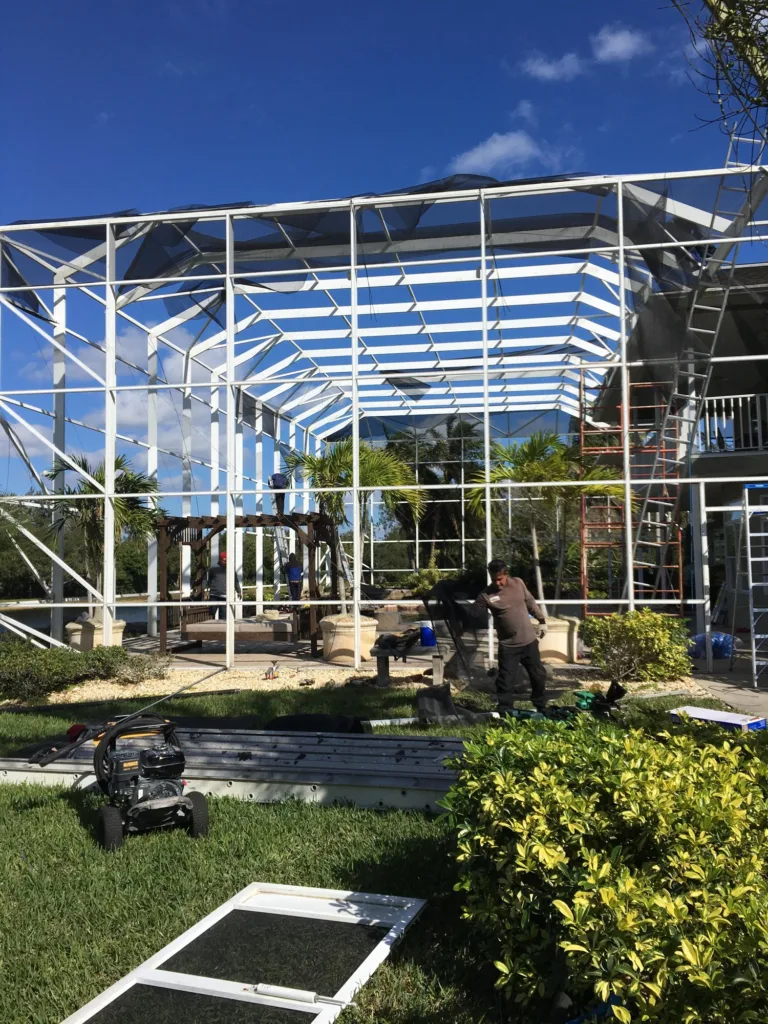
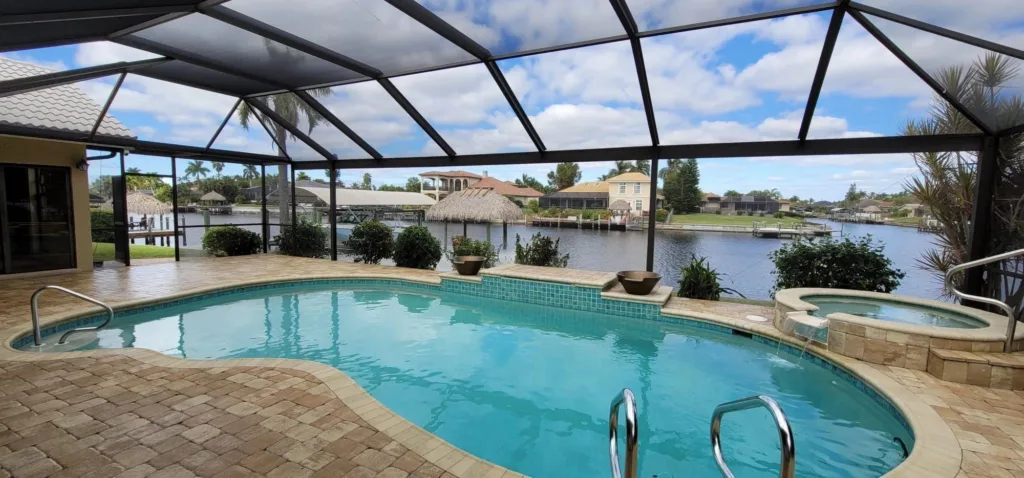
Most aluminum pool cages can accommodate a hot tub, but the right setup depends on the cage’s existing footprint, panel height, and how much humidity and heat the spa will add to the enclosed space. There is no single layout that works for every yard.
The answer changes based on whether the hot tub sits inside an existing pool enclosure or needs its own smaller screened area, how the local climate and salt or storm exposure affect materials, and whether the cage structure itself needs reinforcement or rescreening before the tub goes in.
What Shapes a Hot Tub Enclosure Layout
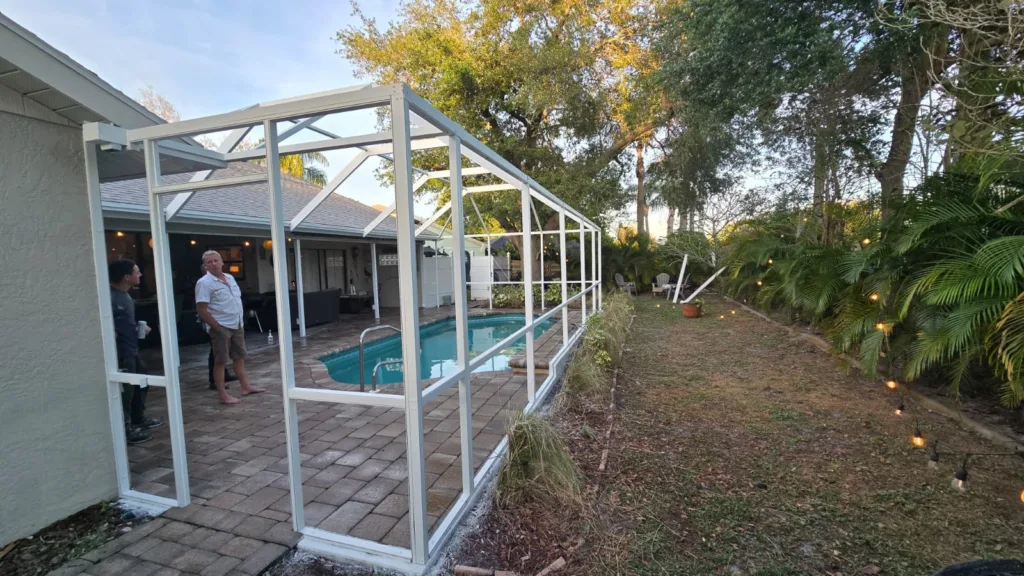
The existing cage footprint usually sets the starting point. A hot tub placed inside a pool enclosure that already has deck space and clearance needs little structural change, while one tucked into a corner near support posts or low panel sections may call for reframing to keep walking space clear and panels accessible for future rescreening.
Panel height and roofline matter more than most homeowners expect. A hot tub produces steam that rises and settles on the underside of the roof panels and upper screen runs. Lower rooflines near Venice and Englewood homes, common on older cages, concentrate that moisture in a smaller area, which can accelerate screen wear and corrosion at fastener points if airflow is limited.
Proximity to the house affects both comfort and maintenance. A spa positioned close to exterior walls or sliding doors increases humidity exposure on nearby screen patio doors and door tracks. Keeping a few feet of clearance, where the yard allows it, gives installers room to inspect and service that section of the cage without affecting the rest of the enclosure.
Screening, Framing, and Ventilation Work
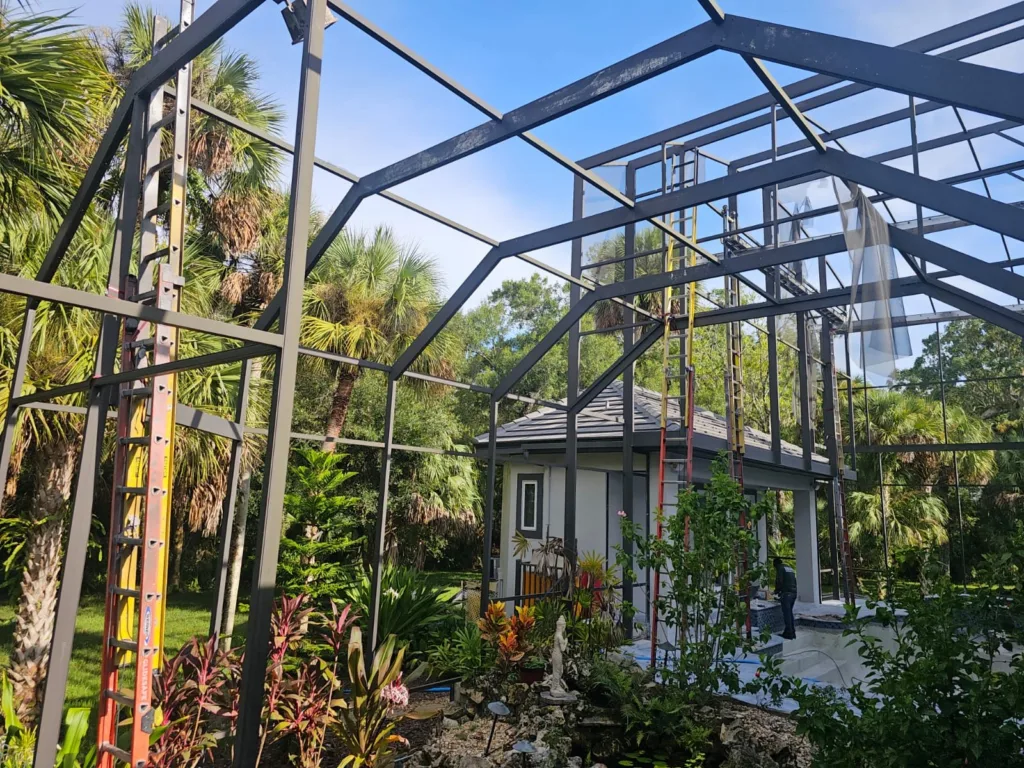
Before any screen work begins, a technician checks panel and frame condition around the planned hot tub location, looking for loose fasteners, bowed panels, or corrosion on aluminum connectors. Frames exposed to salt air common along the Gulf Coast near Sarasota and Bradenton tend to show oxidation first at joints, which is where reinforcement or replacement is usually needed before new screen goes in.
Screen choice and placement around a spa differ slightly from a standard pool cage. Panels closest to the hot tub often get heavier-gauge screen to handle repeated condensation cycles, and installers may space or angle panels to encourage cross-ventilation rather than letting moist air sit against the mesh.
Access is the other practical piece. Adding a screen patio door near the hot tub, or relocating an existing patio screen door, cuts down on foot traffic through the main pool area and reduces how often screens near the spa get brushed or bumped. For enclosures already due for a patio screen door replacement, this is a reasonable time to combine both jobs.
Common Planning Mistakes to Avoid
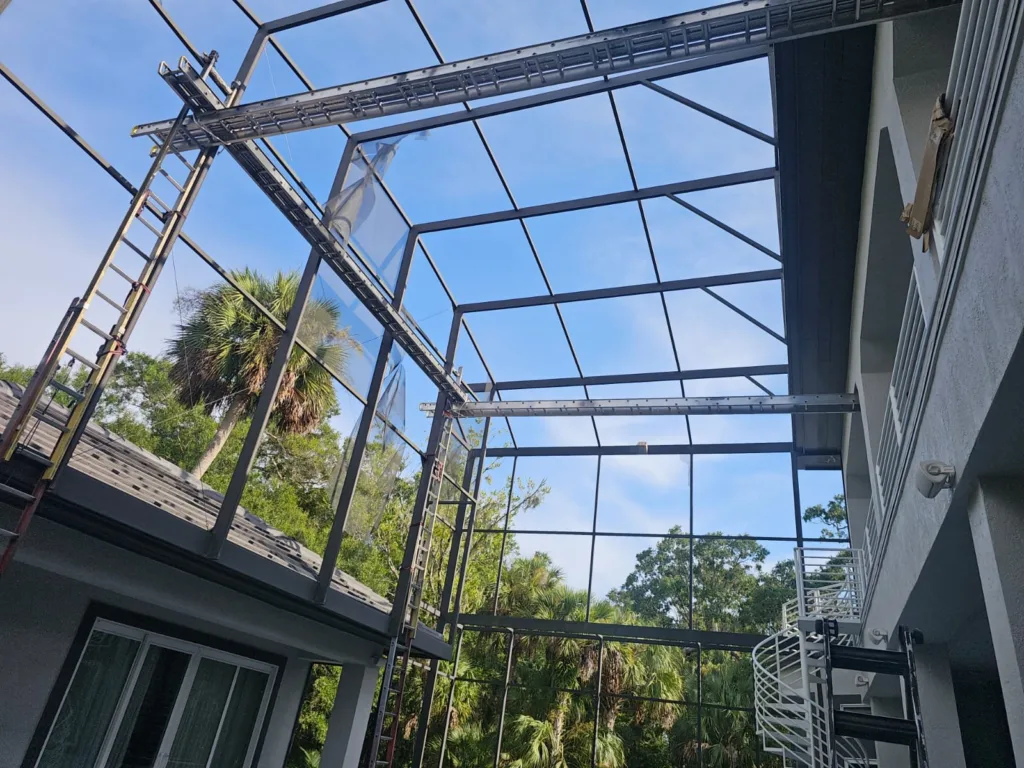
Florida humidity and salt air, common from Englewood and Venice through the Bayshore Gardens area, break down screen fibers and corrode fasteners faster than homeowners expect. A hot tub enclosure plan that looks fine on paper can fail early if the screening near the steam and splash zone was already weathered before the tub arrived.
Many communities around North Port and Port Charlotte have HOA rules governing screen color, mesh type, or enclosure height, and these specifications are easy to overlook until a project is flagged during review. Checking community guidelines before ordering materials avoids rework and delays.
Another frequent error is positioning the tub directly against a frame seam or support beam, which concentrates moisture and weight exactly where the structure is most vulnerable. Adding a hot tub also changes load distribution, so skipping a structural check beforehand can let existing weak points go unnoticed until a panel or fastener fails.
- Screen and fastener condition near planned steam exposure
- HOA or community screen specifications and color rules
- Distance between the tub and frame seams or beams
- Structural capacity before adding weight or new framing
When to Call a Pool Cage Professional
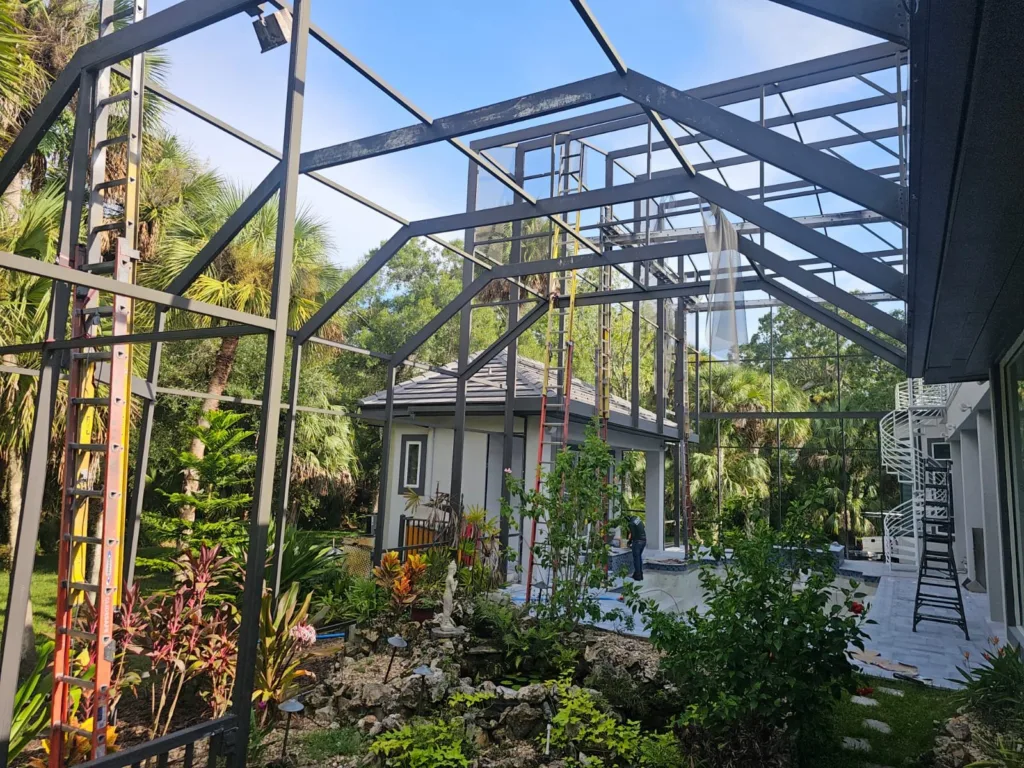
Homeowners can reasonably handle cosmetic choices such as furniture placement, lighting, or deciding where a screen door should open for easy tub access. These decisions don’t affect the aluminum frame or the screen’s structural integrity, so they’re low-risk to adjust without outside help.
Structural changes are a different matter. Reinforcing a frame to support a hot tub, rescreening panels worn by storms or salt air, or repainting aluminum that shows pitting or corrosion all require assessing the cage’s current condition first. Misjudging corrosion severity can mean a cosmetic fix is applied where a structural repair was actually needed.
A professional inspection distinguishes between a panel that simply needs rescreening and a frame that needs reinforcement or replacement before any hot tub is installed. This matters as much for cages in Lakewood Ranch and Bradenton as it does for those closer to the coast, where salt exposure accelerates wear.
How the work is done, step by step
- Inspect the existing frame and screening around the proposed hot tub location
- Check for corrosion, loose fasteners, or stress points near seams and beams
- Confirm HOA or community screen specifications before ordering materials
- Reinforce framing if the structural check shows added support is needed
- Rescreen or repaint affected panels using marine-grade or corrosion-resistant materials
- Final walkthrough to confirm ventilation, drainage, and screen door function around the tub
Most hot tub enclosure adjustments, from inspection through rescreening or reinforcement, take a few days to about two weeks depending on the scope of structural work involved.
Frequently asked questions
Can a hot tub be added inside an existing pool cage without modifying the structure?
In many cases yes, provided the footing and the surrounding deck can support the added weight and the cage has enough clearance for the equipment pad and access panel. A visual inspection of the posts, footings, and screen panels near the planned location is worth doing first, since a hot tub concentrates weight and moisture in one area rather than spreading it across the pool deck.
Does the humidity from a hot tub damage screen or aluminum framing over time?
Sustained humidity and splashing can accelerate corrosion at fasteners and welds, and it can shorten the life of screen mesh that stays damp rather than drying between uses. Aluminum framing that is already painted and sealed resists this better than bare or chalking aluminum, which is one reason repainting is often paired with a hot tub addition.
What screen material holds up best near a hot tub in Florida's climate?
Fiberglass screen is generally more forgiving in a high-moisture, high-chemical area because it does not corrode, while standard aluminum screen can oxidize faster near steam and splashed water treated with chlorine or bromine. For cages near the coast in places like Venice or Englewood, the combination of salt air and hot tub humidity makes fiberglass or a heavier-gauge screen a reasonable upgrade to discuss during an estimate.
Do HOA rules in Southwest Florida communities affect hot tub enclosure changes?
Many communities in the North Port and Port Charlotte area require architectural approval before adding equipment, changing screen color, or altering a cage's footprint, even when the hot tub sits inside an existing structure. Checking with the HOA or deed restrictions office before work begins avoids delays or having to undo changes later.
How much ventilation does a screened hot tub area need?
The area needs enough open screen panel or venting to let steam escape and let the enclosure dry out between uses, rather than trapping moisture against the frame and screen. A technician can look at panel placement and airflow during a site visit and suggest whether additional venting or panel adjustments make sense.
Should the pool cage be inspected before installing a hot tub?
Yes, an inspection of the footings, fasteners, and screen condition is a reasonable step before adding the weight and moisture load of a hot tub, especially on a cage that has not been repainted or rescreened in some time. This also gives a chance to catch any corrosion or loose panels before they become harder, costlier repairs.
Nearby Areas We Also Serve
The company’s crews serve pool cage and screen enclosure projects throughout the Gulf Coast region surrounding its Sarasota base. Longboat Key, Ellenton, Nokomis, Myakka City and Parrish.
Statewide details, colors and the full process are on our main pool cage painting page.
Recent Work

Get a written estimate for your pool cage
Send a few photos of the cage along with the property address, and you will receive a written estimate at no cost. For questions before then, call (877) 840-6727.
Last reviewed: October 30, 2026