
Do DIY Screen Porch Kits Work for Pool Cages?
Before you buy a screen porch kit, understand how pool cage height, panel size, and Florida wind codes change the job.
Get a Free Estimate Today With Sarasota Pool Cage Painting!
Request a free written estimate to compare the real cost and effort against a DIY kit.
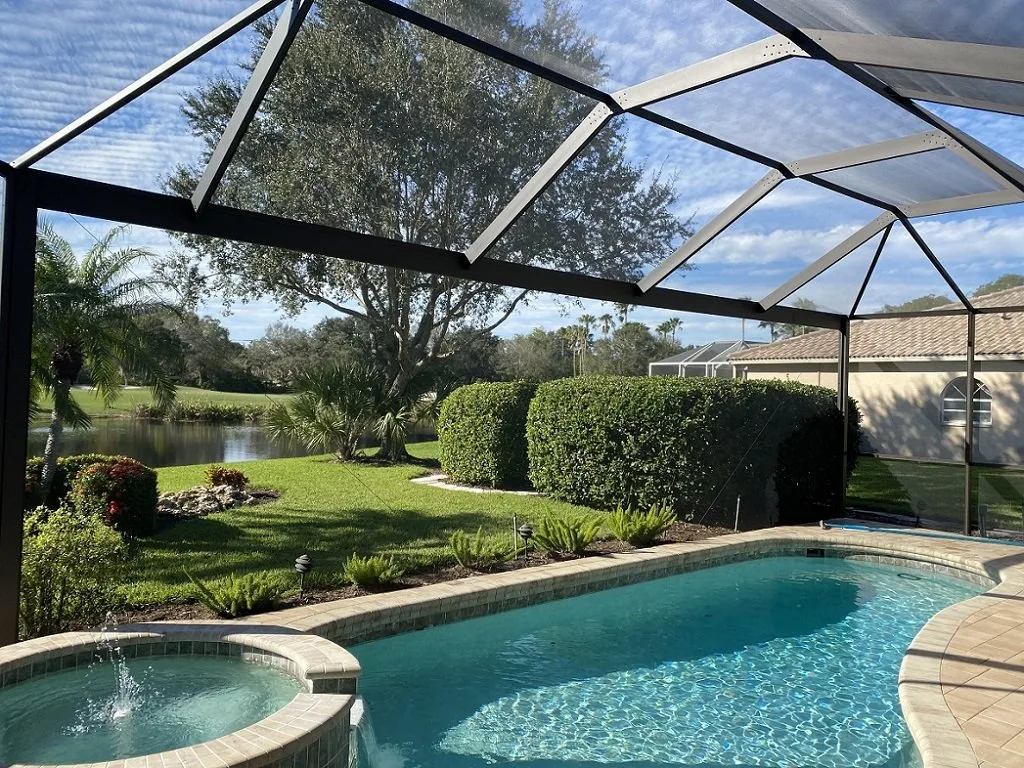
DIY screen porch kits can work for small, low, flat screen porches, but most Florida pool cages are not good candidates because of their height, curved roof panels, and the spline-and-track systems used on aluminum enclosures. A kit built for a ground-level porch rarely matches the hardware on a two-story pool cage.
Whether a kit is realistic depends on panel size, how high the enclosure stands, the condition of the aluminum framing and spline channels, and whether local wind and HOA rules apply. A single screen door replacement is a different project than rescreening an entire pool enclosure, and the right approach changes with each.
What Determines If DIY Works
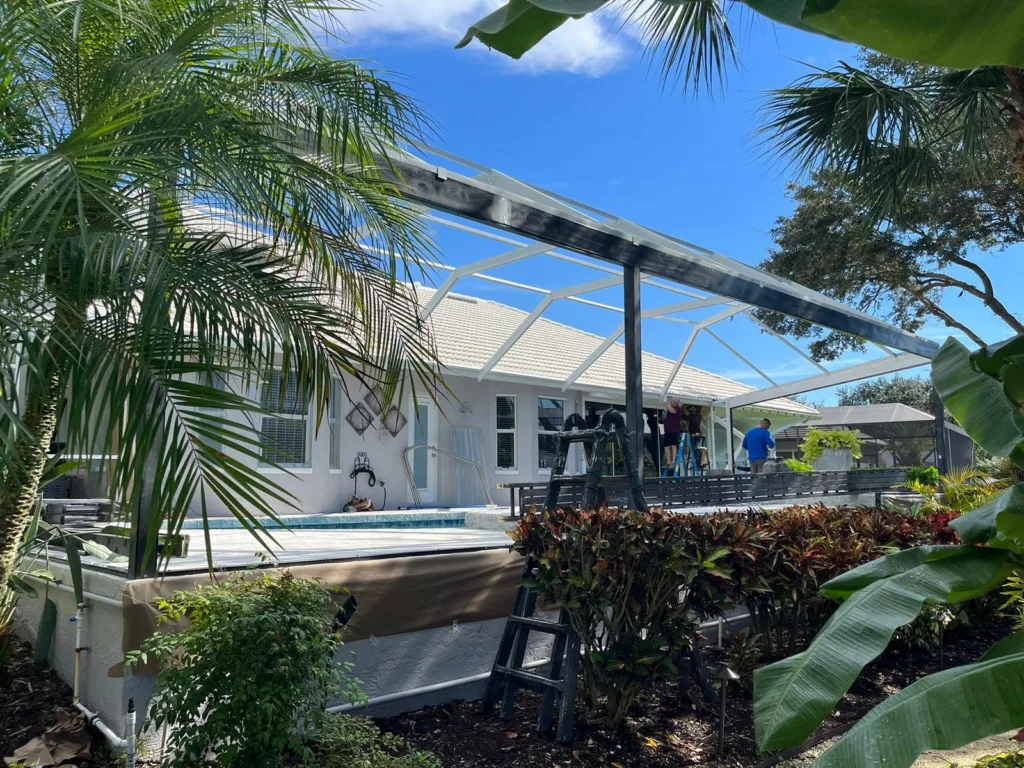
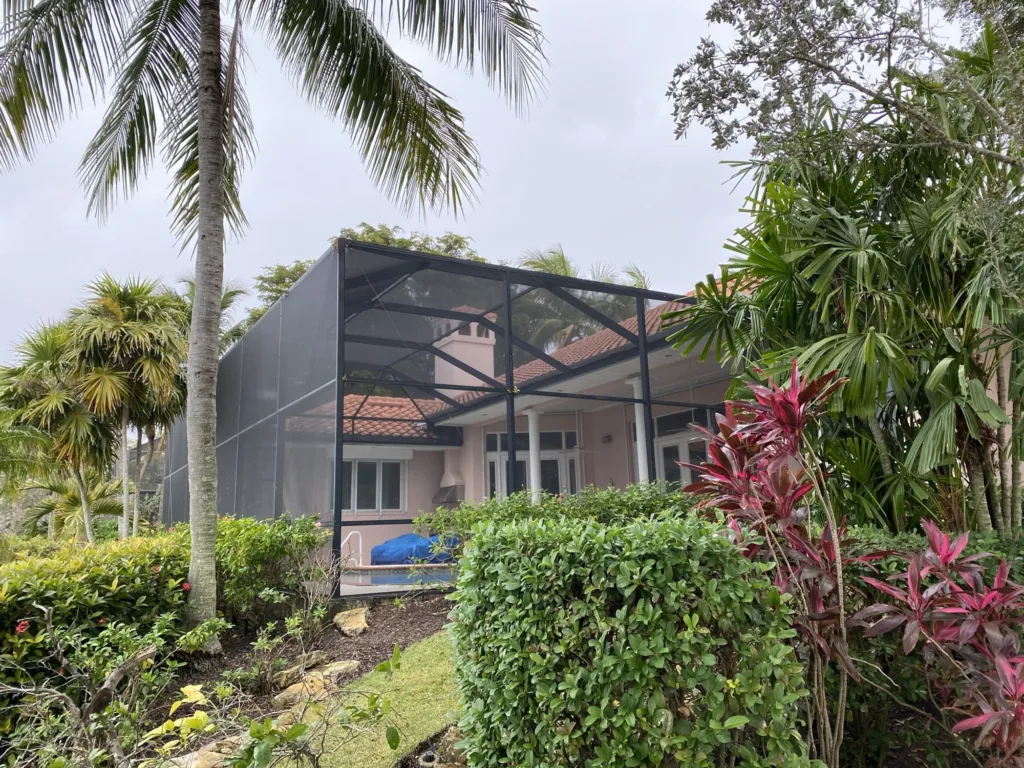
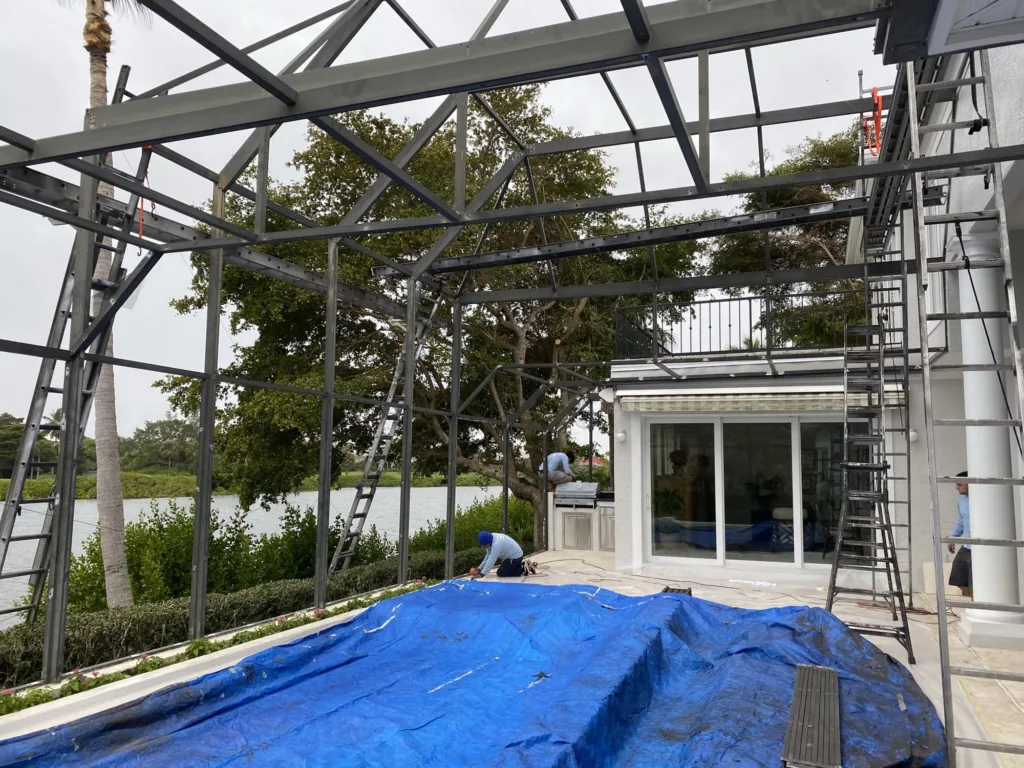
Cage height is the first variable. A screen patio or screen porch built low to the ground allows a homeowner to work from a short ladder or step stool, but a pool screen enclosure that spans two stories around a lanai requires extension ladders, scaffolding, or lift equipment that most kits never account for. Roof pitch adds another layer of difficulty, since flat panels are far easier to re-screen than curved or domed panels common on larger pool enclosures.
Spline size and groove condition matter as much as the screen itself. Aluminum track wears unevenly over years of sun and salt air exposure near coastal areas like Venice or Englewood, and a groove that has widened or cracked will not hold standard spline, no matter how carefully it is installed. Mesh choice also changes the outcome: fiberglass screen is forgiving to cut and roll, while pet-resistant or solar screen is stiffer and less tolerant of DIY mistakes.
- Cage height and number of stories
- Flat versus curved roof panels
- Spline diameter and groove wear
- Mesh type: fiberglass, pet, or solar screen
- Ladder access and fall risk on tall sections
What the Rescreening Work Involves
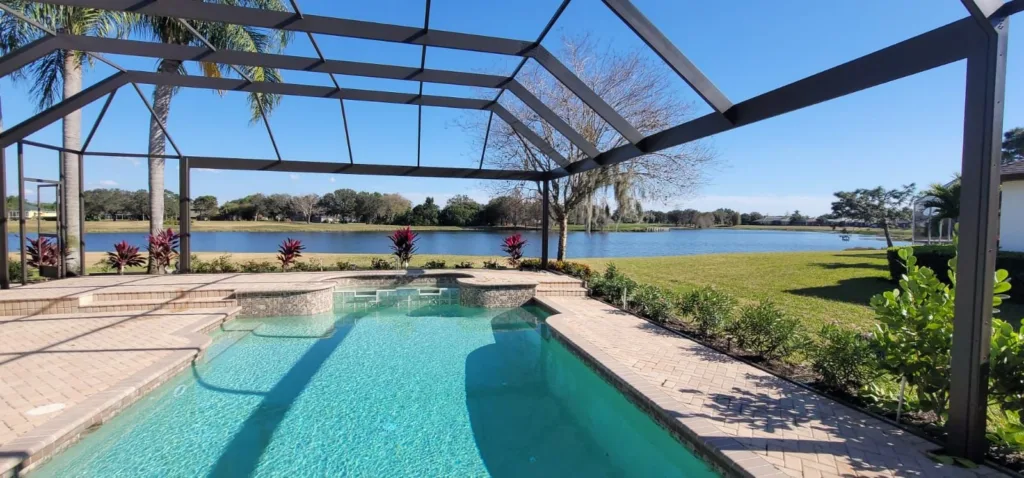
Rescreening starts with removing the old spline and torn mesh from the aluminum channel, then cleaning out debris, old rubber, and corrosion so new spline seats properly. The new screen is measured with extra overlap on all sides, cut to size, and positioned over the opening before the spline tool rolls the material and spline into the groove together, locking it in place without puckers or gaps.
Excess screen is trimmed close to the frame with a sharp blade, and any patio screen door replacement follows a similar process but with closer tolerances around the frame and latch hardware. On a single ground-level panel this might take under an hour. On a pool cage with forty or more panels at varying heights, the same steps repeated from a ladder multiply both the time required and the chance of a fall or a misaligned panel that has to be redone.
Common Mistakes Homeowners Make
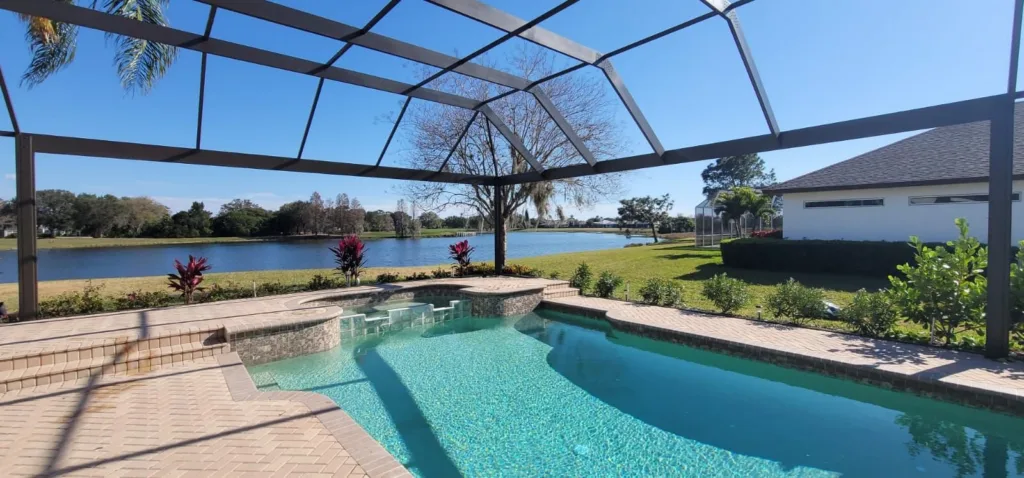
The most frequent error is using spline that does not match the groove diameter in the frame. Too small and the mesh works loose within a season; too large and it strains the channel or will not seat at all. Spline comes in several sizes, and matching it to the existing groove matters more than matching it to the old piece pulled out.
Over-tightening is a close second. Pulling screen drum-tight across a patio screen enclosure panel looks neat on installation day, but aluminum framing flexes with heat and wind, and a screen with no give can bow the frame or tear at the corners within a year. Mesh choice is another common miss: standard fiberglass screen left facing open water or storm-blown debris wears faster than a heavier-gauge alternative suited to that exposure.
Many homeowners also skip checking manufacturer specifications or HOA screen requirements before buying material, which can mean redoing a section to match an approved mesh color or density. On top of that, pool cage work happens at height, over a pool or hard deck, and doing it alone without fall protection or a second person to steady panels is how minor jobs turn into injuries.
When to Call a Pool Cage Professional
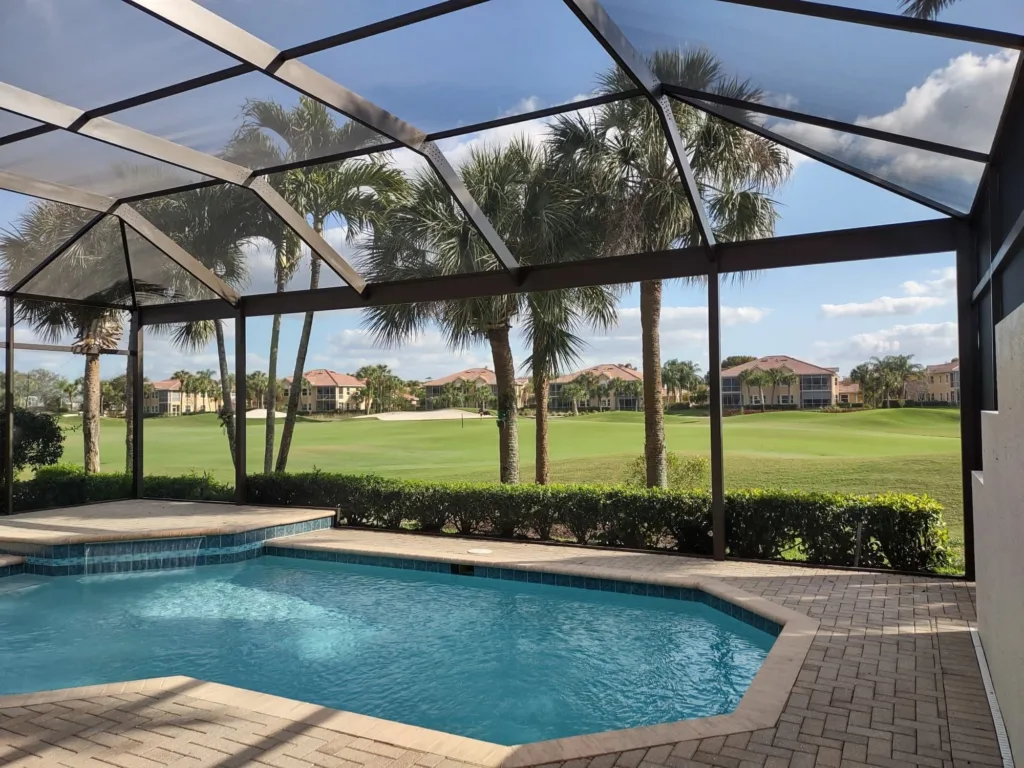
Some jobs are reasonably within reach for a careful homeowner; others are not. Panels beyond the safe reach of a standard ladder, curved or domed roof sections, and any framing that is bent, corroded, or pulling away from its fasteners are signs the project needs a professional rather than a weekend fix, since rescreening over compromised framing just repeats the failure.
A full enclosure rescreen is also a different scale of work than patching a torn panel. It involves consistent tension across dozens of panels, matching mesh throughout, and often coordinating with HOA documentation that specifies approved materials or colors before work begins. Getting that approval and the scope right before buying screen saves time and material.
A written estimate from a pool cage contractor is useful even if a homeowner intends to do some of the work themselves, since it clarifies what the frame condition actually requires, what mesh and spline sizes fit the existing channels, and which panels, if any, are better left to someone working with proper harnesses and equipment.
How a Professional Rescreen Is Typically Approached
- Inspect the full frame for corrosion, bent members, or loose fasteners before any mesh is removed
- Confirm spline size, mesh type, and any HOA-specified screen color or density
- Remove old spline and torn screen, then clean out the channel
- Set new mesh with appropriate tension and press spline into the groove panel by panel
- Trim excess material and check each panel for even tension and secure seating
- Walk the full enclosure to confirm doors, corners, and high panels were completed to the same standard
Timelines vary with enclosure size and frame condition, so most full rescreens run from a single day to several days of work.
Frequently asked questions
Can I rescreen my own pool cage with a kit from a hardware store?
Hardware store kits can work for a small, flat screen porch panel, but a pool cage has curved panels, varying spline channel sizes, and panels set at height, which makes the job harder to do evenly. Mistakes in tension or spline size tend to show up as sagging or pulling screens within a season, especially near the coast where salt air and wind cycles stress the screen faster.
What size spline do I need for an aluminum pool enclosure?
Spline size depends on the width of the groove cut into the aluminum framing, and pool enclosures commonly use a different size than a standard patio screen door or screen porch frame. The safest way to confirm is to remove a short section of old spline and measure it, or bring a sample to a supplier before ordering material for the whole cage.
Is it safe to rescreen a two-story pool cage myself?
Working on a two-story pool enclosure means working at height on curved aluminum panels, often over a pool, which is a different risk than rescreening a ground-level patio screen. Most homeowners are better served calling a crew with the right ladders, harnesses, and experience on screen enclosures at that height.
What is the difference between a screen porch kit and pool enclosure screening?
A screen porch kit is built for flat, square openings at a consistent height, while pool enclosure screening has to follow curved roof panels, taller walls, and framing exposed to more direct sun and humidity. Pool screen enclosure material is typically chosen with that extra UV and weather exposure in mind, rather than the lighter screen used on a screen house or porch.
How do I know if my patio screen door needs full replacement or just new screen?
If the door still closes flush, the frame is straight, and the rollers or latch work properly, a patio screen door replacement of just the screen panel is usually enough. If the frame is bent, corroded, or the door no longer sits square in the track, replacing the full door is often more reliable than repeated screen repairs.
Does Sarasota Pool Cage Painting offer a free estimate before I decide on DIY or hiring a pro?
Yes, a free written estimate is available, and it can help you compare the scope of a professional rescreen or paint job against doing the work yourself. Sending a few photos of the pool cage or screen enclosure is usually enough for an initial assessment.
Nearby Areas We Also Serve
Crews based in the Sarasota area serve surrounding communities along the Gulf Coast, reaching homeowners from their established service area rather than operating a local branch in every town. Longboat Key, Ellenton, Nokomis, Myakka City and Parrish.
Statewide details, colors and the full process are on our main pool cage painting page.
Recent Work
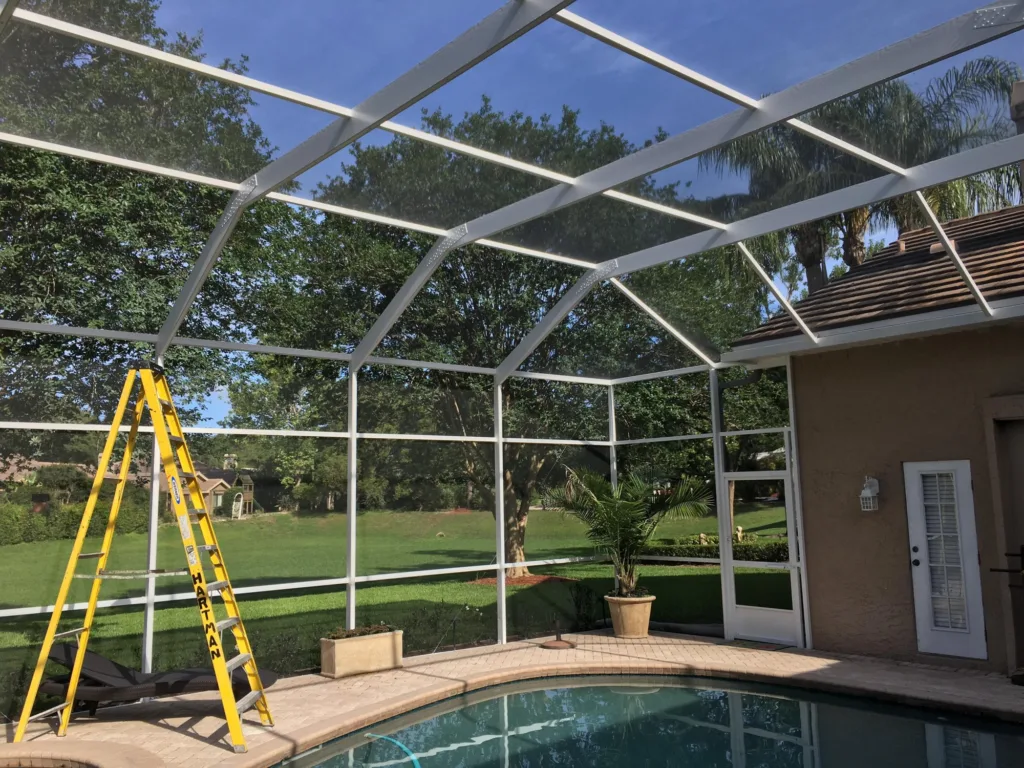
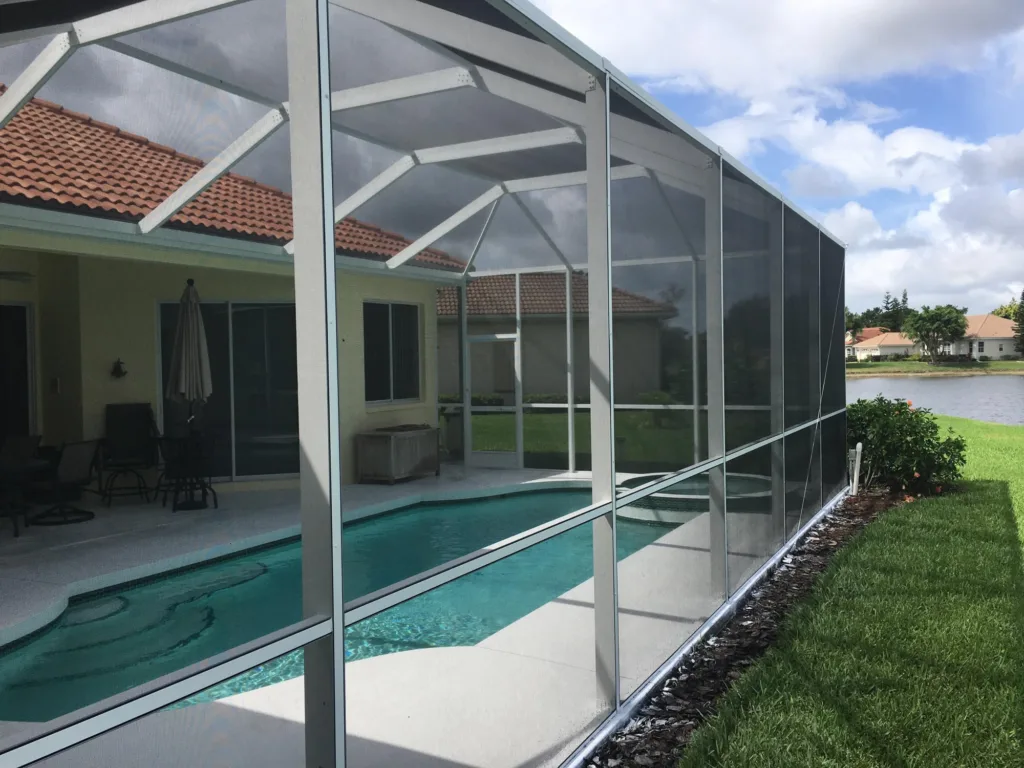
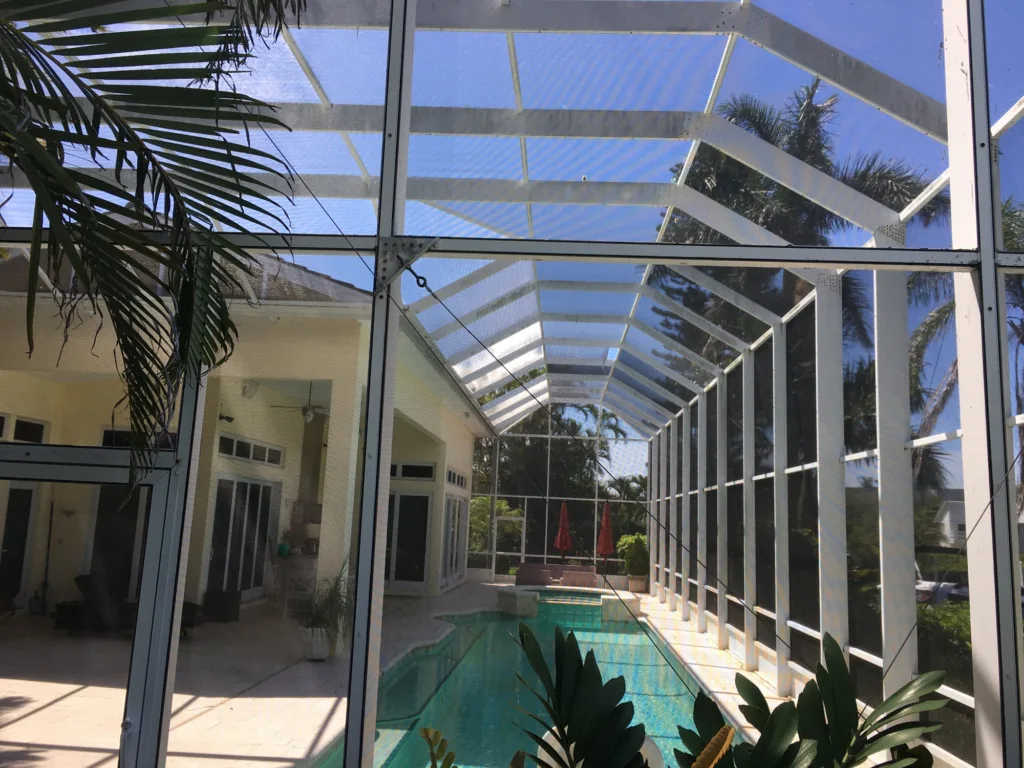
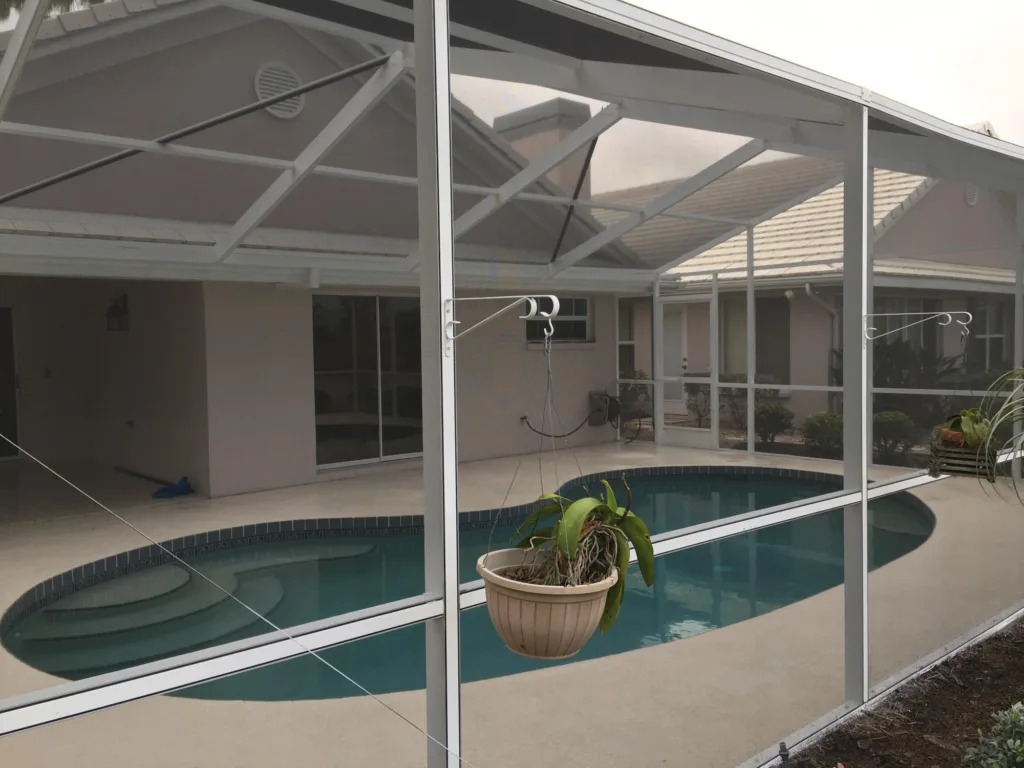
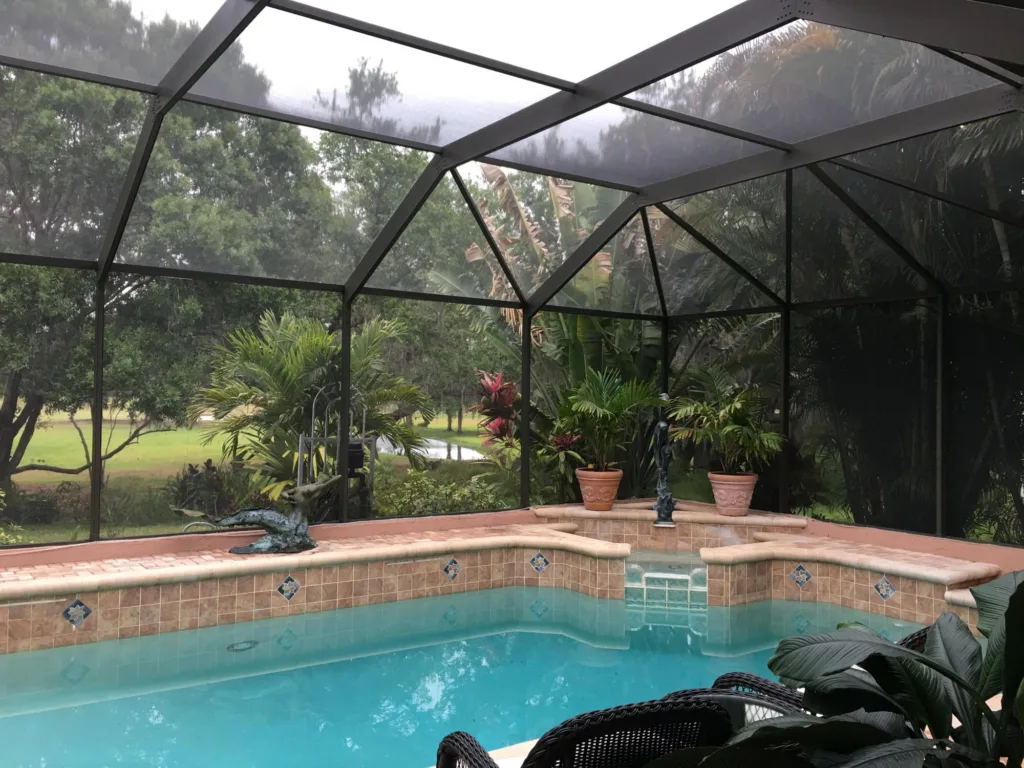
Get a written estimate for your pool cage
Send a few photos of your pool cage or screen enclosure along with the property address, and the reply will include a free written estimate. There is no obligation to move forward, whether you are weighing a DIY rescreen or deciding to hire a crew.
Last reviewed: November 3, 2026