
Do DIY Patio Enclosure Kits Work in Florida?
A straight look at DIY patio screen kits versus professional pool cage work, so North Port homeowners can decide with clear expectations.
Get a Free Estimate Today With Sarasota Pool Cage Painting!
Not sure if your project is DIY-friendly? Request a free written estimate and get a professional opinion first.
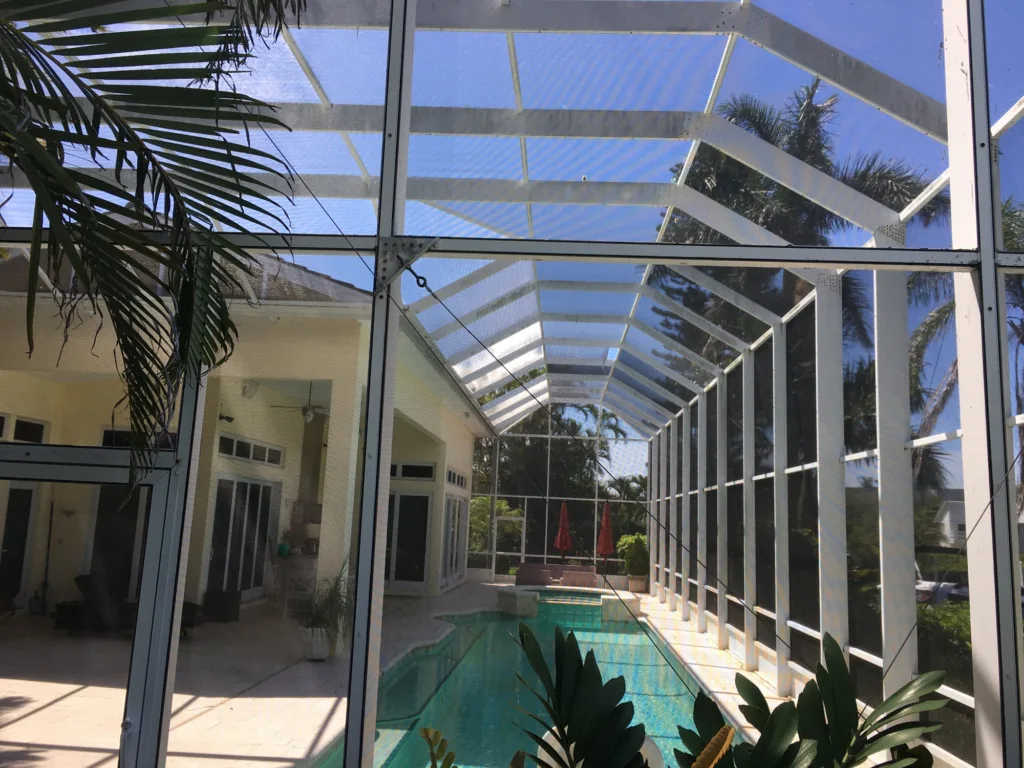
DIY kits can work for small, simple patio screens, but most aluminum pool cages in North Port are not good DIY candidates. A pool cage is a structural, multi-panel aluminum frame tied into roof flashing, footers, and sometimes a screen door system, built to handle Gulf Coast wind loads.
Whether a kit makes sense depends on the structure. A freestanding screen porch or a single patio screen door replacement is a different project than rescreening or repainting an entire pool enclosure. Height, panel count, fastener type, and local wind and HOA requirements all change how realistic a DIY approach is.
What Determines If DIY Is Realistic
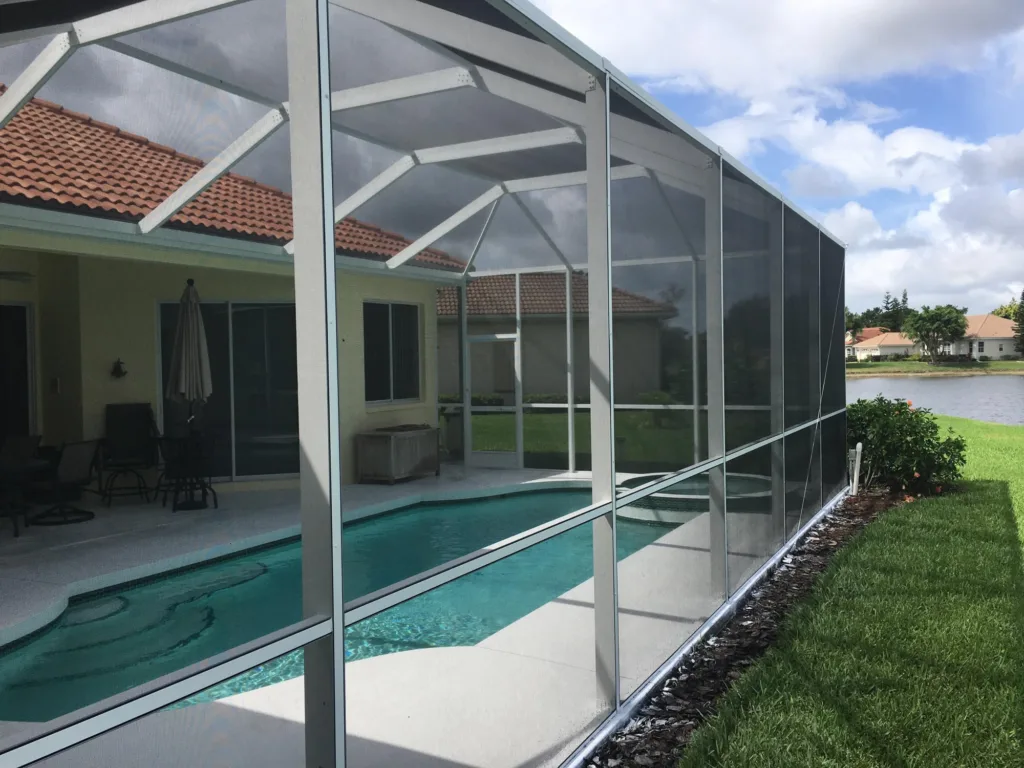
Size and height matter first. A low screen porch panel you can reach from a step stool is a different job than a two-story pool cage enclosure with curved roof panels twenty feet up. North Port homes near Myakkahatchee Creek and the newer developments east of I-75 often have taller cages to clear lanai roof lines, which changes what tools and ladders the work requires.
Wind load is the variable most DIY guides skip. Sarasota County and North Port fall under Florida Building Code wind zones that require screen enclosures to meet specific pressure ratings, especially on panels facing open yards or canals. Rescreening with the wrong gauge mesh or spline size can pass visually but fail the structural intent the original permit was built around.
Whether the structure is load-bearing changes the risk level entirely. A patio screen door or single screen patio panel attached to an existing frame is contained. A full pool screen enclosure ties into roof flashing, footers, and sometimes the house structure itself, so loosening or misaligning one panel during a DIY repair can shift tension across the whole cage.
- Structure type: standalone screen porch vs. full pool cage
- Height and access: ladder work vs. lift-required panels
- Code exposure: wind-rated mesh and fastener specs
- Attachment points: roofline, footers, house tie-ins
What the Work Actually Involves
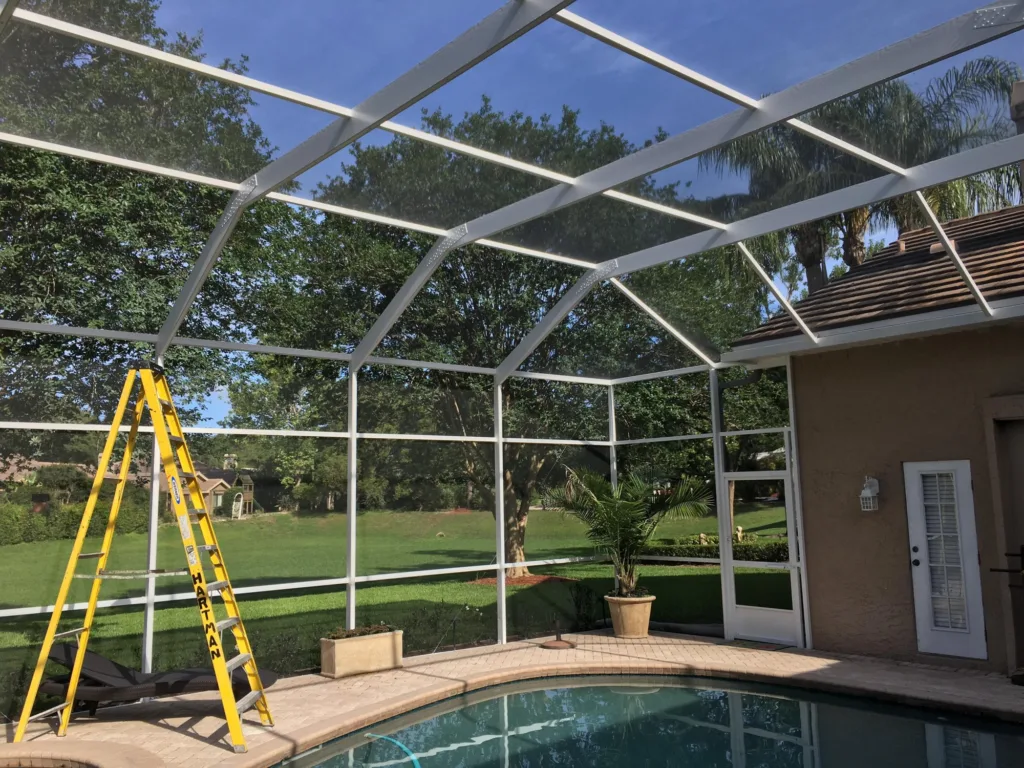
Panel measuring has to be precise to the fraction of an inch, since aluminum framing on pool enclosures is often custom-cut per bay rather than a stock size. Getting a patio screen or pool screen enclosure panel even slightly off means the spline won’t seat evenly, and the screen will bag or pull loose within a season of Gulf Coast humidity and wind.
Mesh choice is its own decision. Standard fiberglass screen suits most patio enclosures, pet-resistant mesh holds up against claws and scratching, and no-see-um mesh blocks smaller insects but reduces airflow and visibility. Each has a different spline channel fit, so mismatching mesh and spline size is a common DIY failure point on screen patio projects.
Fastener work on aluminum framing is often overlooked. Screws that hold panels to the frame corrode in salt-influenced air common to areas near Venice and Englewood, and replacing them one at a time without disturbing panel alignment takes patience. If painting is part of the plan, every fastener and seam needs to be clean and primed first, which adds real time to a project that looks simple from the ground.
- Panel measurement: cut to the bay, not a stock size
- Mesh type: fiberglass, pet-resistant, or no-see-um
- Spline and screw-in track compatibility
- Curved roof panel handling without over-tensioning
- Surface prep if painting accompanies the rescreen
Common Mistakes Homeowners Make
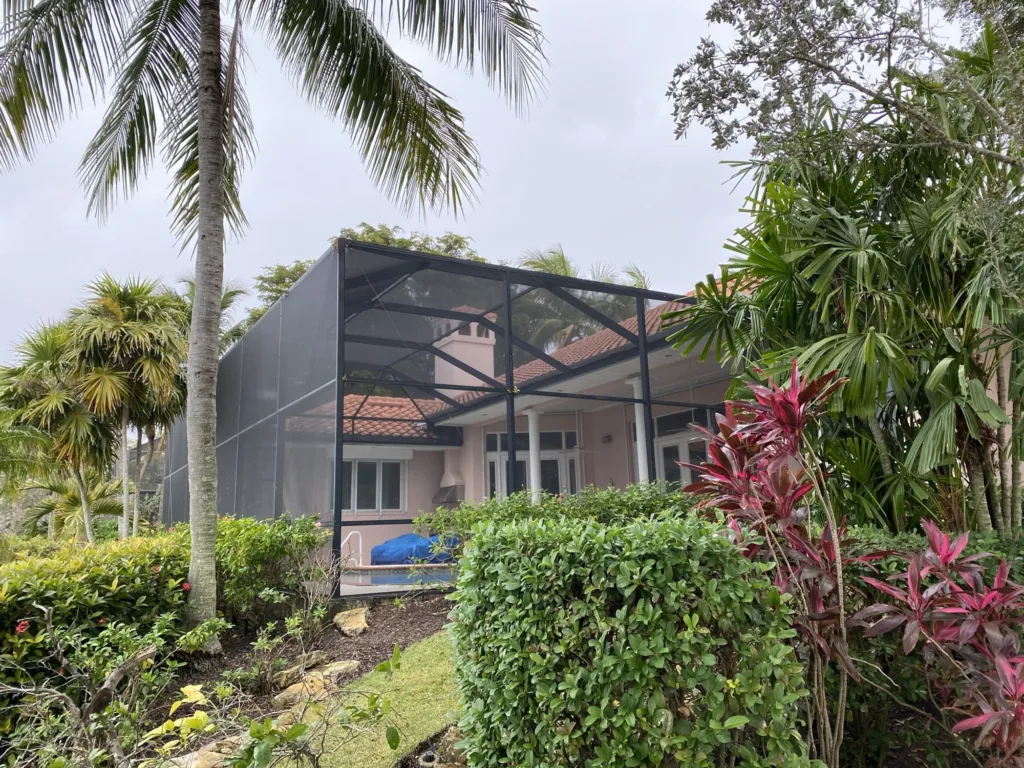
The most common DIY error is screen tension. Pulled too loose, the mesh sags and flaps in wind; pulled too tight, it stresses the spline channel and tears within a season. Matching screen color and opacity to the rest of the enclosure is also harder than it looks, since panels fade differently and a patch job often stands out.
Roof panel flashing and sealant get skipped or applied incorrectly more often than any other step, and that is where leaks start. Fasteners matter too: standard hardware store screws corrode quickly in salt-influenced air near Venice, Englewood, and Bayshore Gardens, staining panels and weakening over time.
Two issues rarely cross a homeowner’s mind until mid-project: HOA approval and ladder safety. Many North Port communities require a submitted plan before any screen or paint change, and tall pool cage sections put workers at heights that call for proper fall protection, not a borrowed extension ladder.
- Sagging or over-tight mesh from inconsistent spline pressure
- Mismatched screen color or opacity between old and new panels
- Leaks from poorly sealed roof panel flashing
- Corroding fasteners not rated for coastal, salt-air exposure
- Starting work before HOA or community approval is on file
- Underestimating the fall risk of multi-panel, two-story cage heights
When to Call a Professional Instead
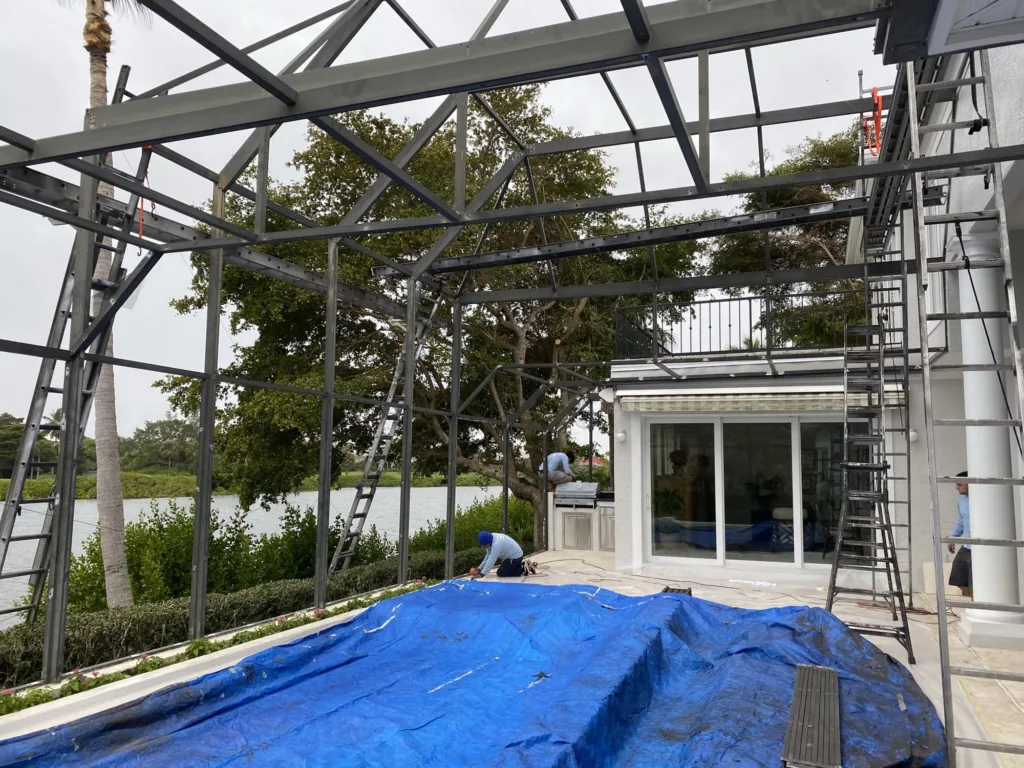
Some jobs are straightforward for a careful homeowner; others are not. A full pool screen enclosure rescreening, a multi-panel or two-story cage, or any sign of aluminum corrosion, loose fasteners, or frame movement are all reasons to bring in a crew experienced with Florida pool cages rather than troubleshoot mid-project.
Combining painting with rescreening adds sequencing that is easy to get wrong on a first attempt, since paint needs to cure before screen spline is reinstalled without damaging the fresh finish. If your community requires documentation of materials or contractor licensing for HOA records, a professional provides that paperwork directly.
Storm damage is its own category. Bent frames, popped panels, or screens torn in wind events can involve insurance claims, and a professional assessment protects you if a manufacturer or installation warranty is in question. In those cases, a written estimate from a licensed crew gives you a clear, documented starting point.
How the work is done, step by step
- Inspect the full enclosure, including frame fasteners, roof panels, and existing screen condition
- Confirm HOA requirements and document materials or colors if the community requires approval
- Remove old screen material and spline, checking for corrosion or frame damage underneath
- Prep and paint aluminum surfaces if requested, allowing full cure time before rescreening
- Install new screen with proper tension using spline suited to the panel size and height
- Seal and flash roof panel transitions to prevent water intrusion before final walkthrough
Most full pool cage rescreening or paint-and-screen projects take a few days to about two weeks, depending on enclosure size and weather.
Frequently asked questions
Can I rescreen my own pool cage in Florida?
A homeowner with the right tools and some patience can replace a few screen panels on a single-story cage. Larger pool cages, two-story enclosures, or panels near the roofline usually call for a spline roller, proper tensioning technique, and a ladder setup that most homeowners do not have on hand, so results and safety vary.
What screen mesh is best for a Florida patio enclosure?
Standard 18x14 fiberglass mesh is common for pool screen enclosures and holds up well against salt air and humidity along the Gulf Coast. For homes dealing with heavier bug pressure, pollen, or a need for more shade and privacy, no-see-um mesh or a solar screen fabric is worth considering, though both reduce airflow somewhat.
How much wind can a DIY-screened pool cage handle?
Screen panels themselves are not rated to resist wind the way the aluminum frame is; they are designed to blow out under extreme pressure so the structure does not fail. A panel that is improperly spliced or under-tensioned can tear loose in a routine summer storm well before it would in a properly installed one.
Do I need HOA approval to rescreen or repaint a pool enclosure in North Port?
Many North Port communities have architectural guidelines covering screen color, mesh type, and sometimes paint color for aluminum framing, so it is worth checking with the HOA or deed restriction committee before starting work. We can provide a written estimate with product and color details that homeowners can submit for approval if needed.
Is it cheaper to DIY a patio screen door replacement than hire a pro?
Materials for a single screen door replacement are relatively inexpensive, so a DIY approach can save money if the frame is square and in good condition. If the door frame has shifted, the hardware is worn, or the track is damaged, a professional repair often ends up more cost effective than repeated DIY attempts.
How do I know if my pool cage needs more than just new screens?
Torn or sagging screens are often just the visible symptom; the aluminum frame underneath should also be checked for rust streaks, loose fasteners, chalking paint, or panels that have pulled away from the beam. A technician can inspect the frame during a screen estimate and point out any structural issues before new mesh goes in.
Nearby Areas We Also Serve
Crews based in the area serve North Port and surrounding Gulf Coast communities for pool cage painting and rescreening work. Longboat Key, Ellenton, Nokomis, Myakka City and Parrish.
Statewide details, colors and the full process are on our main pool cage painting page.
Recent Work
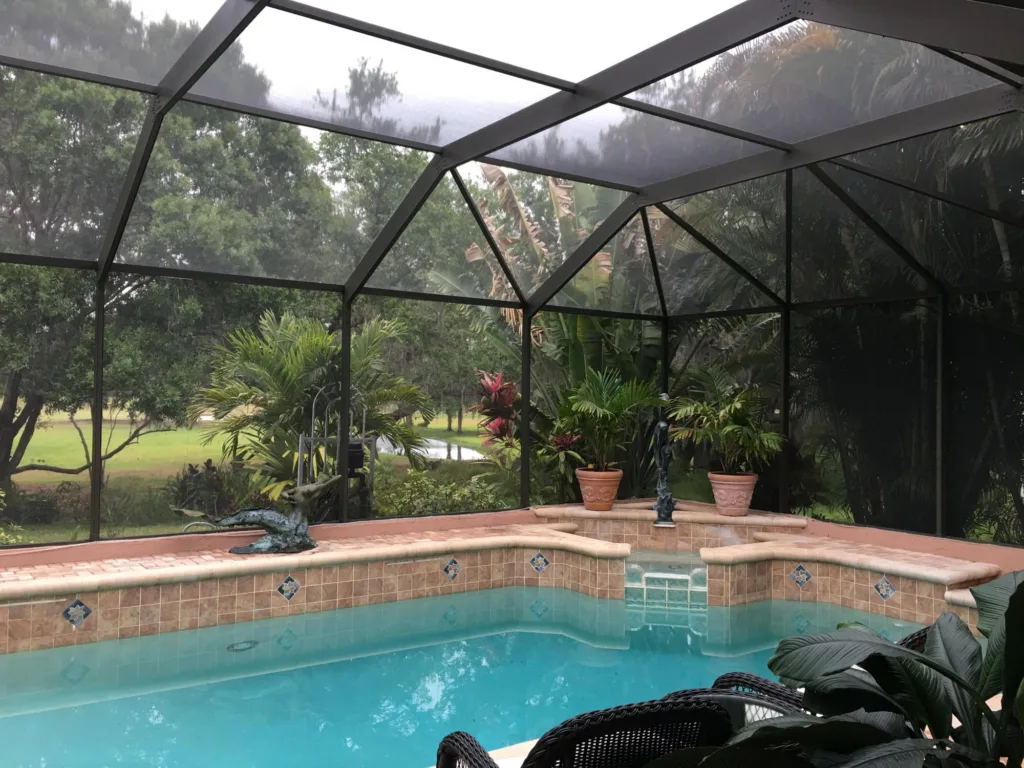
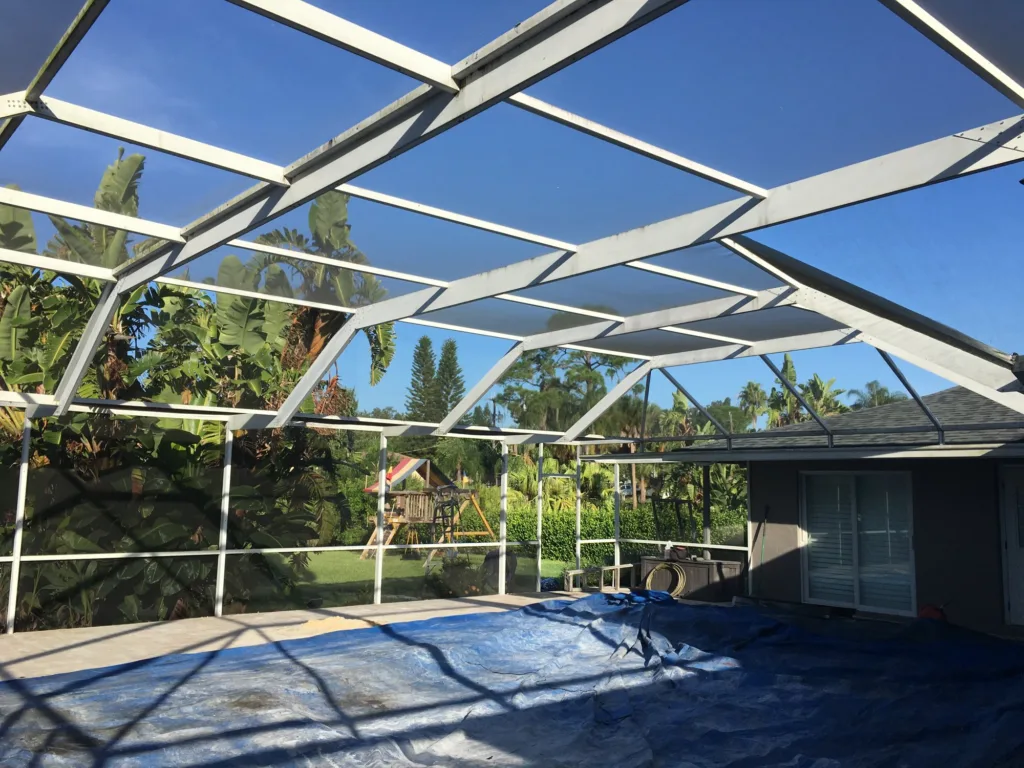
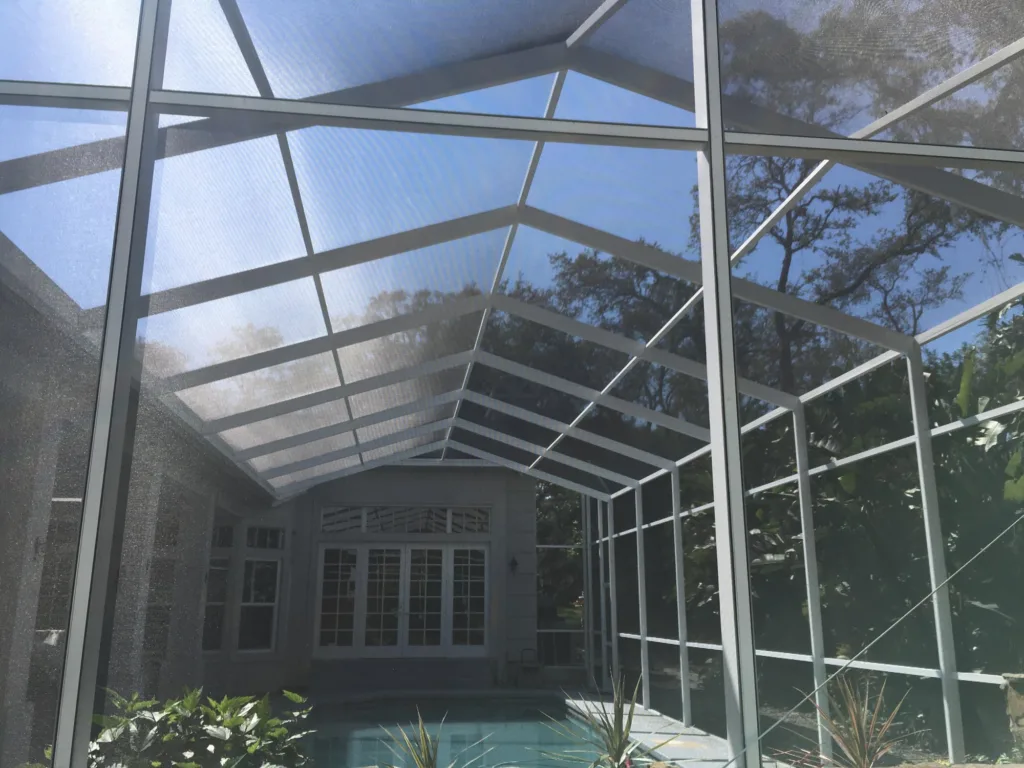
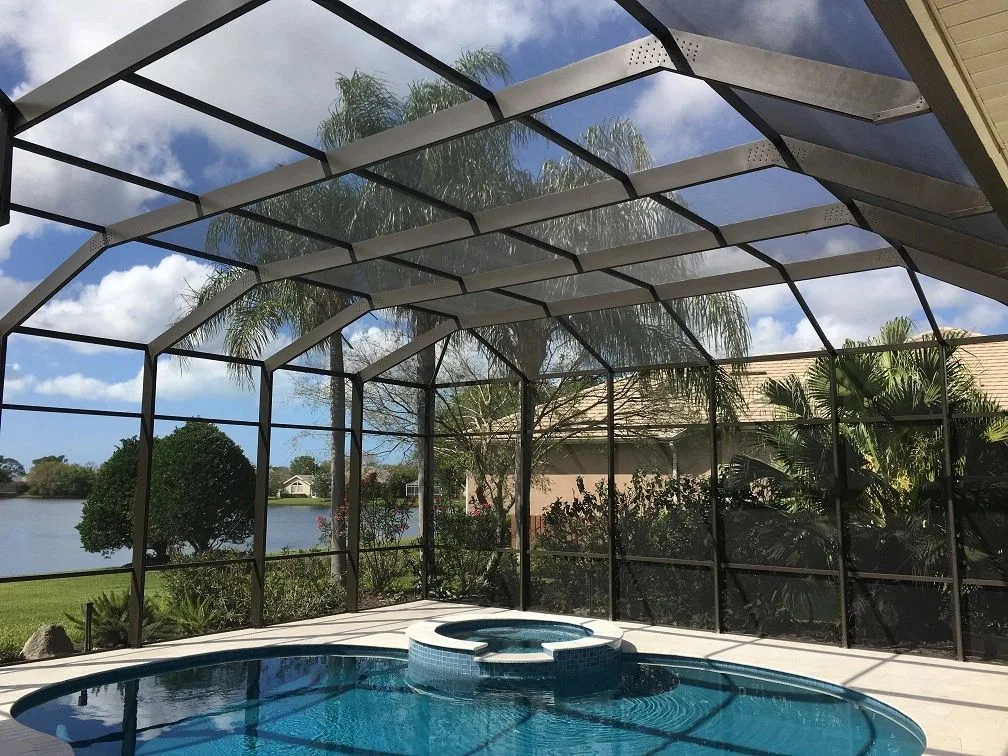
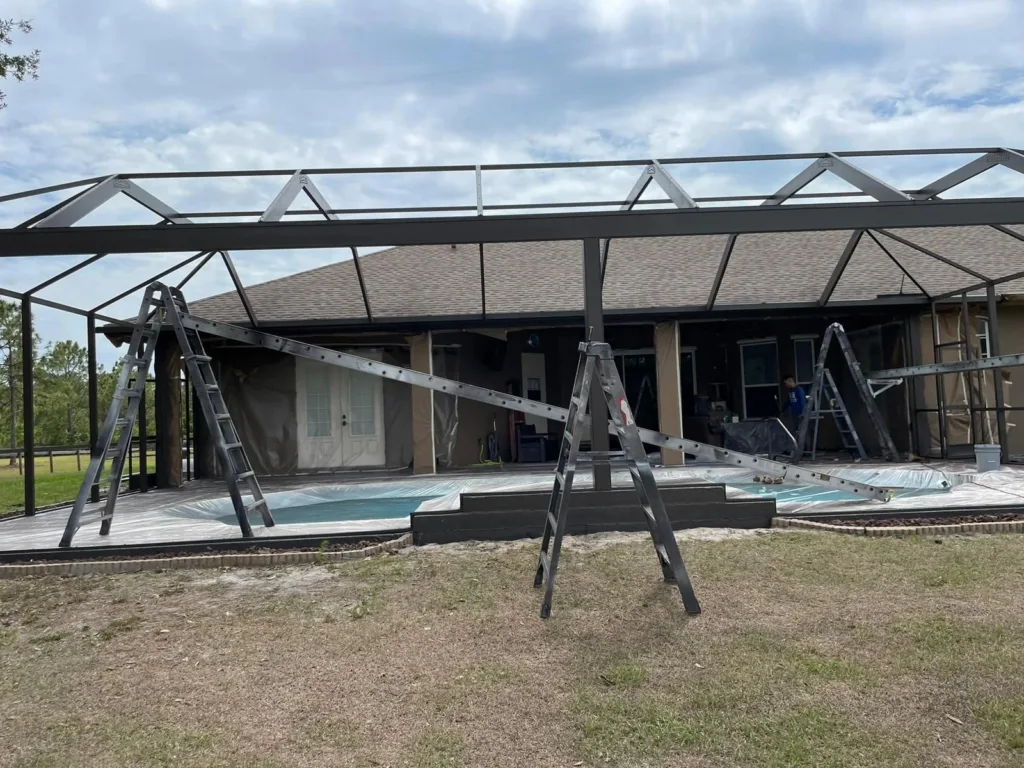
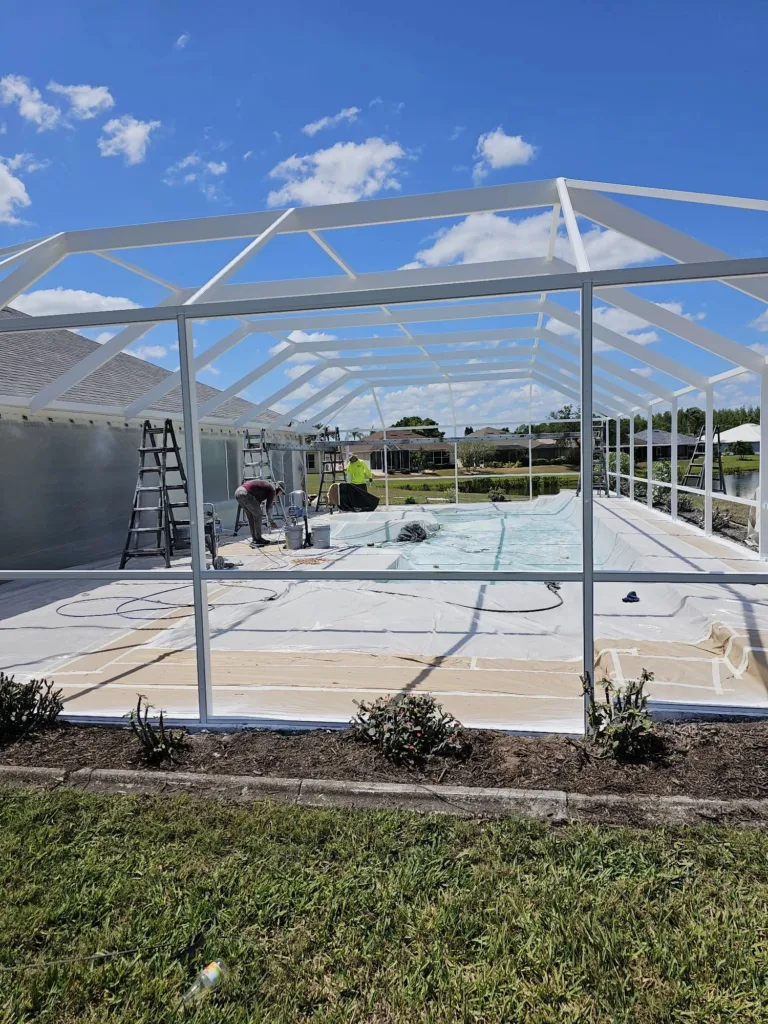
Get a written estimate for your pool cage
Send a few photos of the enclosure along with the property address, and a technician will reply with a written estimate at no cost. For questions before then, call (877) 840-6727.
Last reviewed: November 2, 2026